Requests for landline phone connections have gone up in Russian cities affected by internet shutdowns, Mikhail Oseyevsky, CEO of Russia’s largest telecom operator Rostelecom, told reporters at the congress of the Russian Union of Industrialists and Entrepreneurs (RSPP), currently underway in Moscow.
“I can point out an interesting trend: we've seen a significant increase in requests for landline installations. That's because people have realized that it's a very reliable and high-quality way to communicate. Every home should have one,” he said.
The increase is most visible in cities where there are disruptions in mobile service, and “there are many such regions,” Oseyevsky said. According to him, even “many very respected people” now want a home phone. He also compared a landline to a fire extinguisher, saying “it should be in every home.”
Oseyevsky told reporters that Telegram traffic in Russia “is dying right now,” while WhatsApp traffic is “dead.”
“There's virtually no WhatsApp traffic at all. Something might pop up there every few hours or days, but there's practically no traffic. That's why WhatsApp is dead, and Telegram is dying right now. We can see that foreign messaging apps — one is dead, the other is dying — while Max is growing, growing rapidly in terms of traffic,” he added.
Vladimir Putin also took part in the RSPP meeting. His speech was preceded by opening remarks from the union’s head, Alexander Shokhin, who complained that restrictions on mobile internet had complicated life for businesses and ordinary people.
“We certainly understand that these issues relate to national security and the need to ensure that whitelisted websites continue to operate. However, given the widespread use of mobile technology in our daily lives, we hope that a systematic and balanced solution can be found here, although we realize that this is no easy task,” he said.
Putin did not respond to Shokhin’s remarks in any way, nor did he mention the ongoing internet and cell service blackouts affecting multiple Russian regions.
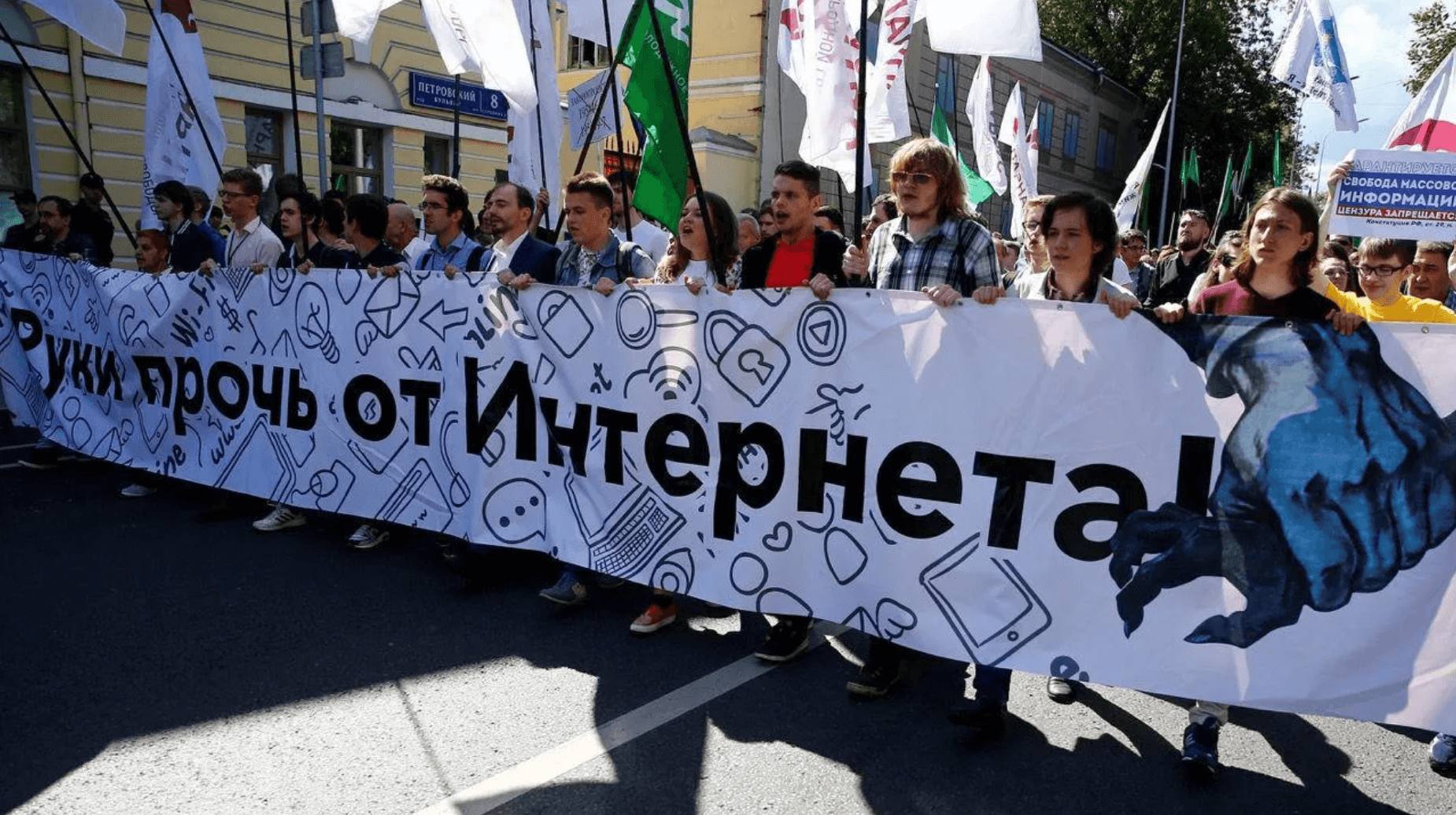
In recent months, Russian authorities have tightened their control over the internet, blocking popular services and censorship-circumvention tools while periodically restricting mobile internet access in various parts of the country. A recent multi-week internet and cell service shutdown in Moscow caused over 5 billion rubles ($61.4 million) in losses for the city’s businesses, with locals actively searching for walkie-talkies, paper maps, and wired internet to cope with the outages. MPs in Russia’s lower house of parliament, the State Duma, ran into the same connectivity and communications outages as their fellow citizens, with many going to a nearby bank branch to try and catch a signal.
Mobile internet began working again in central Moscow on March 24 following more than two weeks of restrictions. The move was directly approved by the FSB, according to Sarkis Darbinyan, a cyber lawyer who spoke with The Insider.
“The internet was switched back on because, most likely, the FSB decided the threat was gone. What threat the chekists feared, we still do not know. Maybe it really was drones, or maybe something else,” the expert said.
Russian officials claim the measures have been undertaken for security reasons, including the threat of Ukrainian drone attacks.