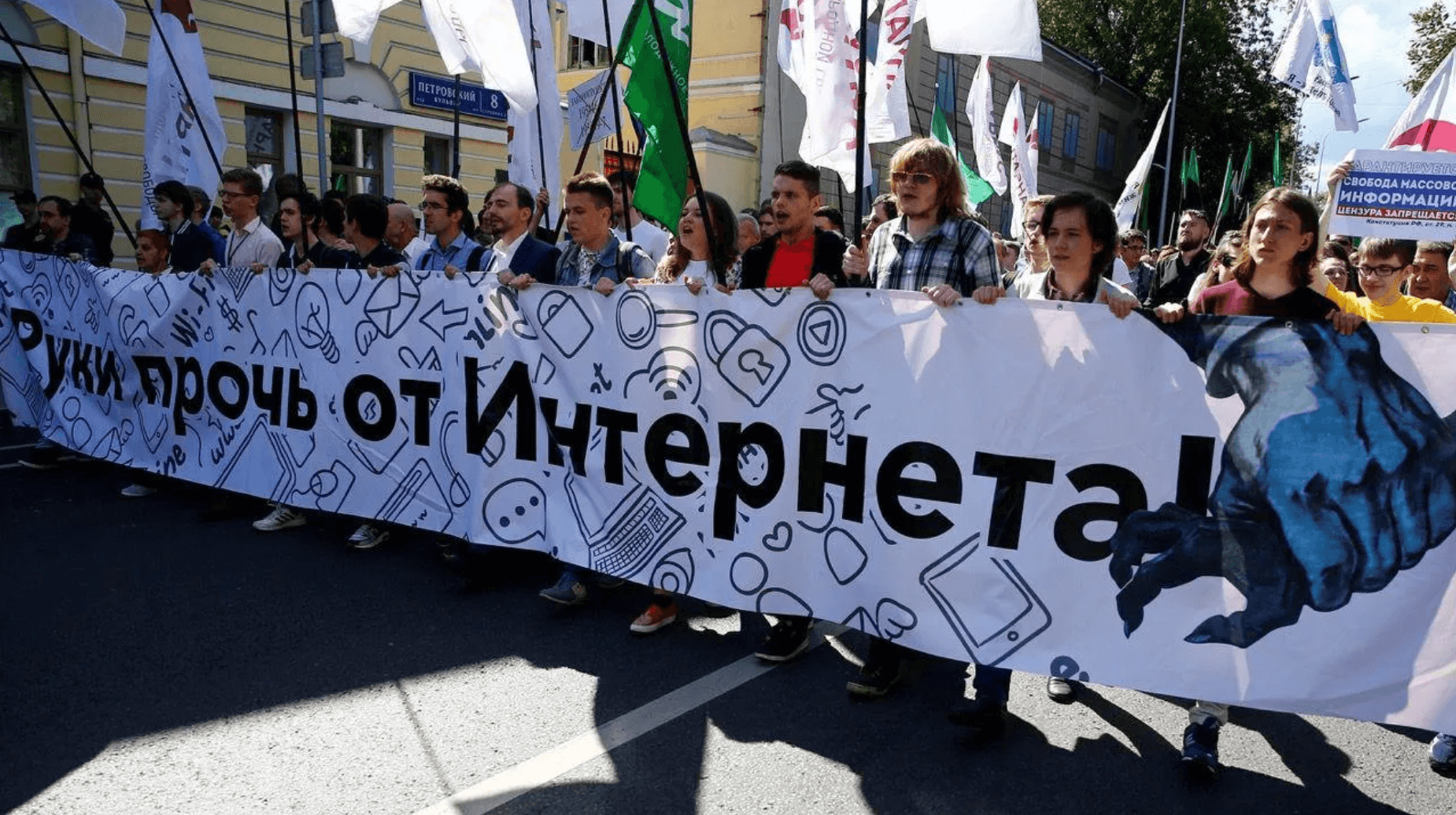
Authorities in the Russian city of Vladimir have revoked permission for an April 1 rally against internet restrictions, according to a report by Dmitry Kisiyev, founder of the “Candidates’ Headquarters” (Shtab Kandidatov) movement. City officials had earlier proposed that date themselves after banning a rally planned for March 29. In the first case, the refusal was explained by cleanup work at all 10 sites proposed by the activists. In the second, officials pointed to security threats posed by drones.
By The Insider’s count, rallies in support of a free internet have been banned in at least 13 Russian cities in recent weeks.
In the Vladimir Region’s town of Murom, local authorities demanded that a demonstration planned for April 1 be cancelled due to a supposed drone threat.
Authorities in Krasnodar revoked permission for a rally scheduled for March 28 — one that had been initiated by the local branch of the Russian Communist Party. According to a report by Kommersant citing regional party secretary Alexander Safronov, officials changed their minds due to the “difficult operational situation” created by air raid alerts. Organizers had planned to gather up to 200 people to demonstrate in defense of free speech and against government efforts aimed at censorship, blocking, and throttling internet services.
A demonstration against internet restrictions in Volgograd was banned for the same reason. The application for the rally had been submitted by a 20-year-old resident of the neighboring city of Volzhsky. She estimated that close to 200 people were set to gather at Metallurgov Square, but officials proposed postponing the event until “after the situation stabilizes and the level of danger goes down.”
In Perm, a rally was canceled two hours before it was set to begin, according to a report by the regional branch of opposition politician Yekaterina Duntsova’s unregistered Rassvet (lit. “Dawn”) party. The city administration claimed the existence of a “potential emergency situation” at the site of the rally. Despite the cancellation, about 50 people showed up at the appointed time, with two of them being detained and taken to a police station because they were carrying placards protesting the internet restrictions.
Permission to protest was also revoked in the Siberian city of Irkutsk. A rally planned for March 1 involving about 300 participants had been organized by the local branch of the Yabloko party. It was initially approved before officials later said they had “identified significant public attention to the upcoming event.” According to them, an increase in the number of participants threatened public safety.
Supporters of the opposition politician Boris Nadezhdin, meanwhile, were denied permission to hold demonstrations in support of a free internet in five towns in the Moscow Region: Krasnogorsk, Dolgoprudny, Khimki, Korolyov, and Mytishchi. According to Nadezhdin, local officials justified the bans by citing the risk of the spread of COVID-19.
In Moscow and St. Petersburg, requests by the anonymous Aliy Lebed (lit. “Scarlet Swan”) movement to hold demonstrations were not approved. The group, which launched a Telegram channel in mid-March, recently ran a large online campaign calling on Russians to take part in internet freedom protests on March 29. The independent outlet Verstka reported that several of the Aliy Lebed channel’s administrators are between the ages of 14 and 20. On March 23, a second channel with the same name appeared on Telegram; its authors said they had “made a serious mistake” by giving associates of pro-war blogger Vladislav Pozdnyakov access to the first channel, allegedly resulting in “his subordinates gaining control [over the channel] and posting a fake fundraiser in our name.”
In recent months, Russian authorities have tightened their control over the internet, blocking popular services and censorship-circumvention tools while periodically restricting mobile internet access in multiple regions. A recent multi-week internet and cell service shutdown in Moscow caused over 5 billion rubles ($61.4 million) in losses for the city’s businesses, with locals actively searching for walkie-talkies, paper maps, and wired internet to cope with the outages. MPs in Russia’s lower house of parliament, the State Duma, ran into the same connectivity and communications outages as their fellow citizens, with many going to a nearby bank branch to try and catch a signal.
Mobile internet began working again in central Moscow on March 24 following more than two weeks of restrictions. The move was directly approved by the FSB, according to Sarkis Darbinyan, a cyber lawyer who spoke with The Insider.
“The internet was switched back on because, most likely, the FSB decided the threat was gone. What threat the chekists feared, we still do not know. Maybe it really was drones, or maybe something else,” the expert said.
Russian officials claim the measures have been undertaken for security reasons, including the threat of Ukrainian drone attacks.