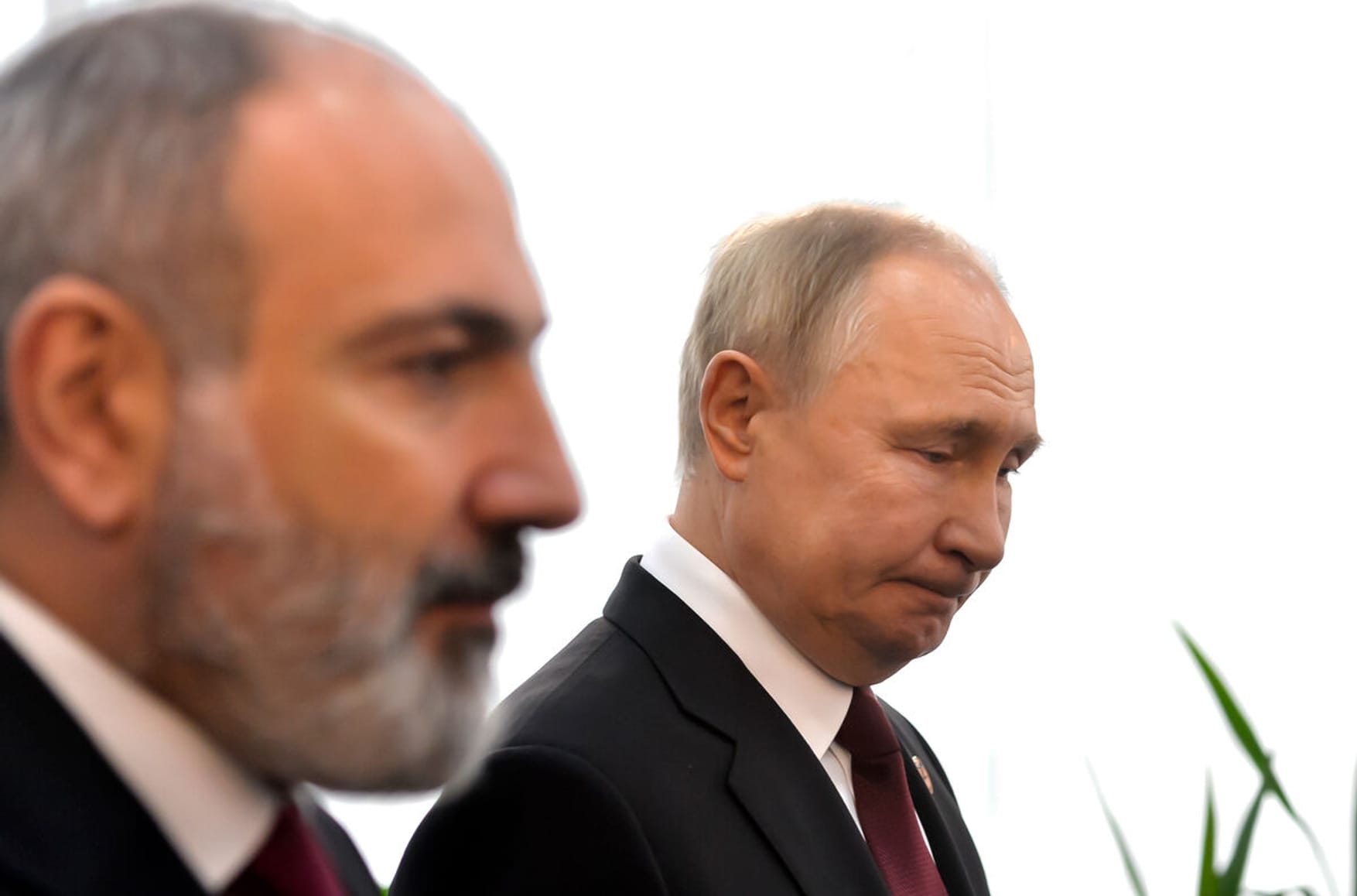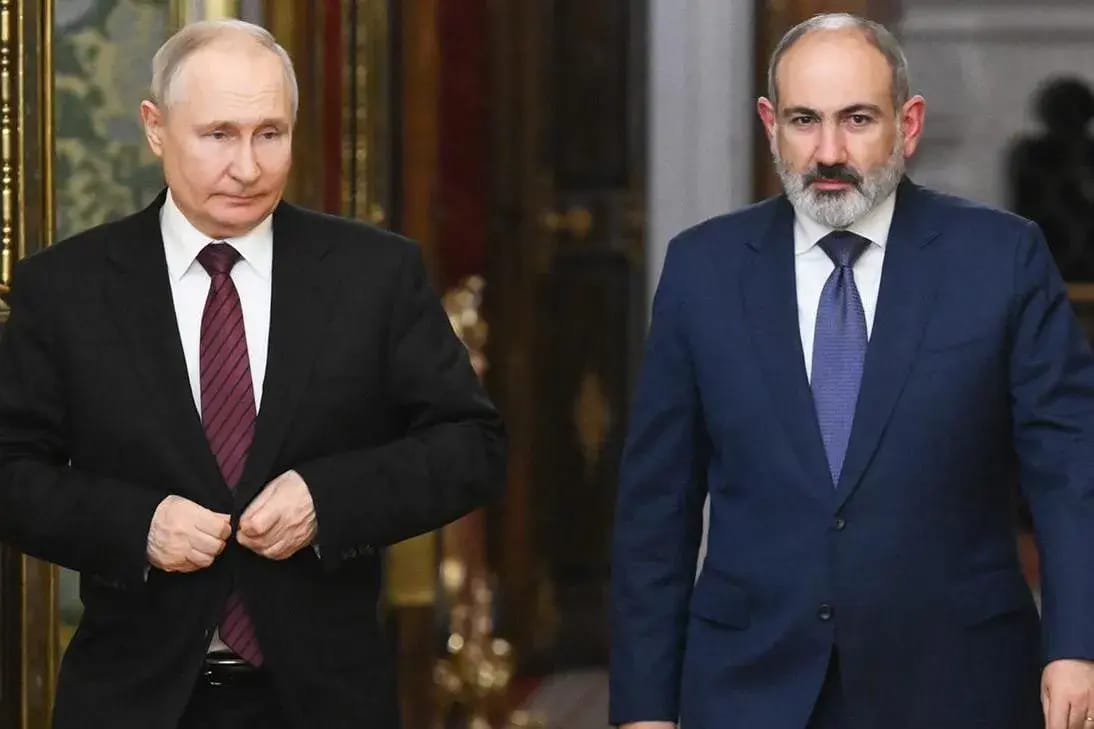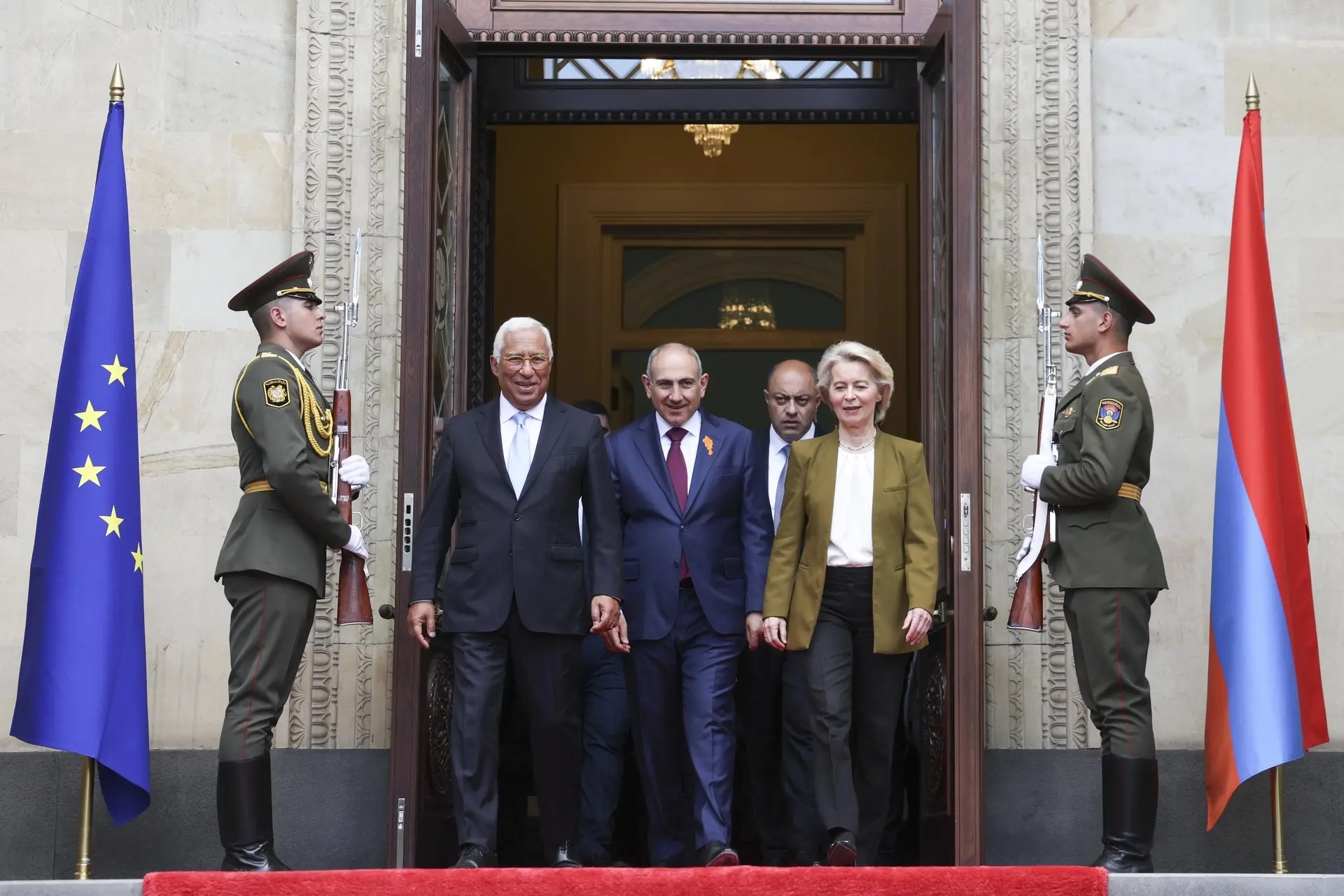
Until recently, Georgia was considered the EU’s main ally and partner in the Caucasus. However, the dramatic political turn in Tbilisi, coupled with the 2020 war in Nagorno-Karabakh, have fundamentally reshaped the region’s geopolitical reality. In March 2025, Armenia adopted a special law launching its course to EU accession. Then, on May 4 and 5 of this year, Yerevan hosted the leaders of around 40 countries as part of the first-ever EU–Armenia summit. Officials in Yerevan understand that Moscow will try to put up obstacles in their path, but three quarters of the population support the course toward integration with the EU. In short, it appears the country has already made its strategic choice.
Armenia in Europe’s spotlight
When the European Political Community (EPC) summit and the first-ever EU–Armenia summit were first announced, only experts in Armenian affairs actually understood the scale and significance of the events, but Yerevan prepared its hosting duties so diligently that even people far removed from politics soon understood that something big was coming. At the Armenian capital’s Zvartnots airport, planes carrying heads of state began arriving one after another. Until the very last moment, intrigue surrounded whether Ukrainian President Volodymyr Zelensky would attend the EPC summit, with the hosts hoping he would not.
However, Zelensky did arrive, and even made several high-profile statements. Among them was this one:
“Russia has announced its May 9 parade, but there will be no military equipment there. This will be the first time in many years that they cannot afford to display weapons at the parade. And Ukrainian drones may also fly over that parade. That is telling.”
After this statement, it became completely clear that a reaction from Russia would follow (and it did follow). After all, Zelensky spoke these words in a capital that many Russian figures had characterized as an outpost that would “never go anywhere.” But today, Armenia’s leadership openly states that it is not Russia’s ally in the conflict with Ukraine. Yerevan has even sent humanitarian aid to Kyiv. Yet more than Zelensky, Yerevan was awaiting the leaders of the countries with which it planned to sign declarations on strategic partnership.
What Yerevan gained from the summits
Alongside heads of state, dozens of journalists from the world’s leading media outlets flew into Yerevan, and Armenia became one of the top stories in the news cycle. Much of the attention came thanks to French President Emmanuel Macron, who not only took an evening stroll through the city accompanied by Prime Minister Nikol Pashinyan, but also went for a morning run with members of his delegation…and several stray dogs. The following day, Macron sang songs by Charles Aznavour while Pashinyan accompanied him on the drums.
France is becoming Armenia’s gateway to Europe. In Yerevan, the sides signed a declaration on strategic partnership, along with agreements on the purchase of transport helicopters and aircraft.
Emmanuel Macron also found time to receive Armenia’s Order of Glory from President Vahagn Khachaturyan and to visit Armenia’s second-largest city, Gyumri. And once again, the visit was accompanied by controversial statements about Russia:
“For a long time, it was believed that Armenia’s security was possible only under Russia’s protection. The 2020 war, the ordeal you endured, the tragedy experienced by many families, showed that this protection was not what many had imagined it to be.
We saw that Russia left Armenia to fend for itself, and we realized that these expectations did not correspond to reality, even though everyone seemed accustomed to believing that Russia was supposed to be the guarantor in the region, because the South Caucasus was supposedly always meant to remain under someone’s protection.
Armenia has proven that another path is possible — a democratic path, launched in 2018 — a path of peace and independent development without external domination.”
Macron also stated that 4,000 Russian troops, including more than 1,000 border guards, are still stationed on Armenian territory. Therefore, he said, Europe must commit itself to helping the country establish more independent border security.
During the EU–Armenia summit, the European agency Frontex and the Armenian Interior Ministry agreed on the text of a new cooperation agreement in the field of border management and migration. The deal provides for strengthening bilateral cooperation in the area of law enforcement, including through interaction with Europol, Eurojust, and the European Multidisciplinary Platform Against Criminal Threats.
In Gyumri, just a few kilometers from the places visited by the French president, stands Russia’s 102nd military base, home to the aforementioned several thousand soldiers. Armenia’s leadership has no plans to remove them — at least not for now, as repeated high-level statements attest. However, given the shifts underway in the South Caucasus, the status quo is prone to change.
President of the European Council António Costa stated in Yerevan that the EU must help Armenia adequately cope with present and future challenges:
“Today’s EPC Summit is truly historic. It is historic because for the first time the EPC meets here, in the South Caucasus; and because it places Armenia in the heart of Europe, which is exactly where it belongs – in light of its long and rich history… And I am glad that again, like in previous Summits, the EPC will be a catalyst for action. Action in support of Ukraine, Moldova, and Armenia.”
A turning point
Armenia has long looked toward Brussels. Back in 2009, during the presidency of Serzh Sargsyan, Armenia and five other former Soviet states – Azerbaijan, Georgia, Moldova, Belarus, and Ukraine – became part of the EU’s Eastern Partnership initiative. Its goal was to deepen political association and economic integration with the European Union. However, 2013 proved to be a turning point.
After several years of negotiations with Brussels, Yerevan was preparing to sign an Association Agreement that envisaged deeper political and economic ties with the EU, as well as the creation of a free trade area. But in September of that year, Sargsyan unexpectedly announced that Armenia would refuse to sign the document and would instead join the Russia-led Customs Union, which later became the Eurasian Economic Union.
The decision marked a major shift in the country’s foreign policy and provoked mixed reactions both within Armenia and among its European partners. In Yerevan, the move was explained by security concerns and close military-political ties with Moscow, which at the time remained Armenia’s main ally.
Even after the change of power in Armenia in 2018, this foreign policy course changed only slightly. Nikol Pashinyan still visited Moscow more often than Brussels, and that status quo could have continued for a long time had it not been for the war with Azerbaijan in 2020. As a result of the 44-day conflict, Armenia effectively lost control over Nagorno-Karabakh.
On November 9 of that year, a trilateral ceasefire agreement was signed, with Russian mediation, and Moscow’s peacekeepers entered the unrecognized republic. It seemed that the Kremlin had further strengthened its position in the region. However, Azerbaijan had other ideas on the matter.
When Baku launched further military operations on Armenia’s sovereign and internationally recognized territory, Yerevan appealed for help to its allies in the Collective Security Treaty Organization — first on May 13, 2021, when Azerbaijani armed forces entered Armenia’s Syunik Province, and then in September 2022, when the city of Jermuk came under attack. But in neither the first nor the second case did Yerevan receive so much as diplomatic backing. This was another turning point.
The Collective Security Treaty Organization failed to provide Armenia with even diplomatic backing, and this became a turning point for the country
Events unfolded rapidly after that. The negotiation process shifted from Russia to Europe, meaning Nikol Pashinyan and Ilham Aliyev no longer traveled to the Kremlin for meetings with Vladimir Putin. Instead, they were received in Prague or Brussels.
European mediators asked Yerevan to soften its demands, and some time later Armenia officially recognized Nagorno-Karabakh as part of Azerbaijan. Then, in September 2023, Baku launched what it called an anti-terrorist operation in the region, causing both the Armenian population and the Russian peacekeepers to leave. Moscow thus lost its main lever of influence over Armenia and Azerbaijan.
The EU as a civilizational alternative
The loss of Nagorno-Karabakh was a painful blow, but it also opened up European prospects for Armenia.
Against the backdrop of the inaction of the Collective Security Treaty Organization and Russia, public opinion began to change rapidly. For many Armenians, the loss of Nagorno-Karabakh became the moment of final disillusionment with the previous system of alliances. Increasingly, people in the country began to view the European Union not merely as an economic partner, but as a possible political and civilizational alternative.
Recent sociological studies confirm the shift. According to a survey by the International Republican Institute (IRI) conducted in February 2026, 72% of Armenia’s residents support the country’s possible accession to the European Union. If a referendum were held “next Sunday,” 51% would vote in favor of EU membership, while only 13% would oppose it. Another 32% said they would not participate in the vote.
If a referendum were held “next Sunday,” 51% would vote in favor of EU membership, while only 13% would oppose it
At the same time, the European vector is increasingly linked not only to issues of democracy, but also to security. The authors of the study note that Armenians see closer ties with the EU as a chance to strengthen the country’s economy, reduce its dependence on Russia, and obtain new guarantees of stability.
In 2024, 66% of respondents described relations with Russia as negative — the highest figure in the entire history of IRI observations. At the same time, when asked about the main drawbacks or dangers of joining the EU, those who are not ready to support European integration responded that the EU would be an unreliable partner (22%), that membership would lead to the loss of national values (15%), and that it would undermine Armenian family traditions (12%).
What the EU promises and delivers
One of the European Union’s most visible steps in Armenia was the deployment of European observers on the Armenian-Azerbaijani border. The mission was established after the escalation in the fall of 2022, when Azerbaijani troops advanced into Armenian territory. Just a few months later, the EU sent the civilian European Union Mission in Armenia (EUMA) to the country. Its personnel patrol border regions, monitor the situation along the line of contact, and prepare reports for Brussels.
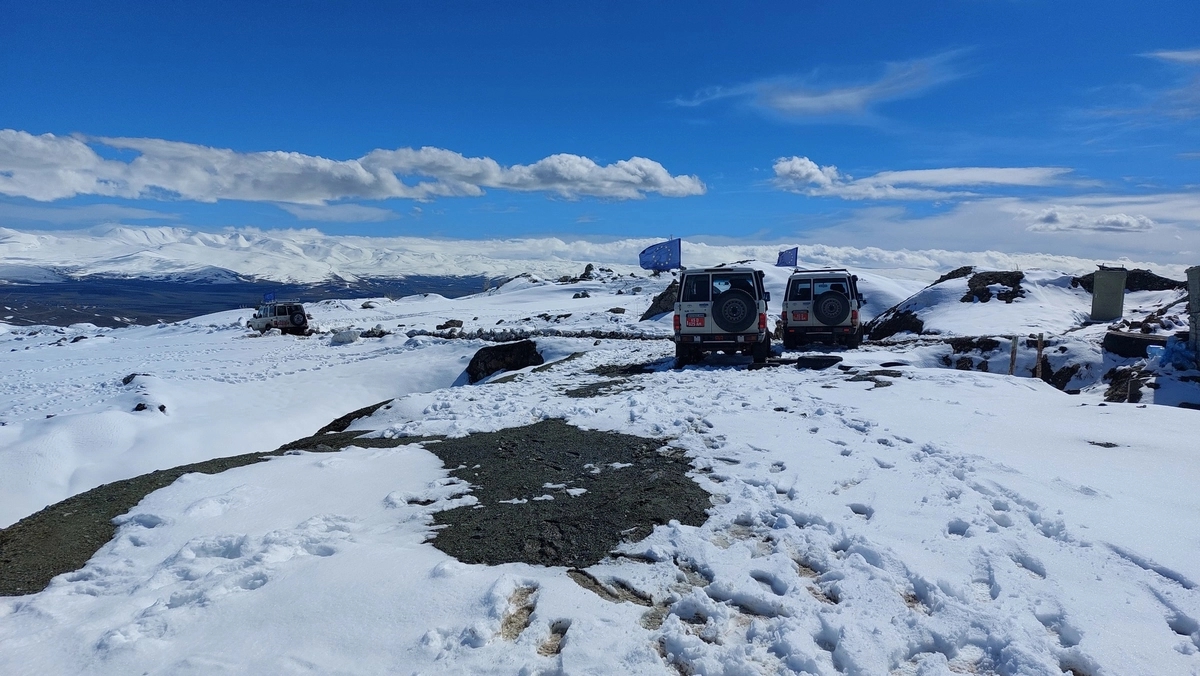
For Armenia, the significance of this mission turned out to be far broader than its formal mandate. For the first time in decades, a Western security-monitoring mechanism appeared in the South Caucasus without Russia’s participation. In Yerevan, this was perceived as a political signal: Europe was prepared not only to talk about reforms and democracy, but also to maintain a presence in the region during a crisis. Armenian authorities have repeatedly stated that the presence of European observers helps reduce tensions on the border and makes developments there more visible to the international community.
With the EU Mission in Armenia, a Western security-monitoring mechanism appeared in the South Caucasus for the first time — without Russia’s participation
At the same time, the European Union began providing economic backing to Armenia. After the loss of Nagorno-Karabakh and the sharp deterioration in Yerevan’s relations with Moscow, Brussels effectively offered the country a new partnership framework. In April 2024, at a joint EU–US–Armenia meeting in Brussels, Ursula von der Leyen announced a four-year assistance package worth €270 million.
The funds are intended for infrastructure development, support for small and medium-sized businesses, energy projects, digitalization, and assistance for displaced people from Karabakh. Later, the EU clarified that the total volume of European investment in the Armenian economy under the Global Gateway program could reach €2.5 billion.
In Brussels, officials openly say they want to make the Armenian economy more resilient, reduce its dependence on Russia, and gradually bring the country closer to European standards in areas ranging from market regulation to visa liberalization. The latter process is already well underway: at the EU–Armenia summit, European Union leaders presented Armenian authorities with the first report on the progress of its implementation and noted Yerevan’s significant achievements along this path.
How to minimize the risks on the road to the EU
Speaking before the European Parliament in October 2023, Nikol Pashinyan stated that “the Republic of Armenia is ready to be as close to the European Union as the European Union considers possible.” In essence, this statement means that Yerevan is prepared to do so as soon as tomorrow. But for countries such as Armenia, Georgia, Ukraine, and Moldova, EU membership is a long and difficult process. Yerevan has not yet received an official offer to become an EU candidate country, so European integration is generally seen more as a civilizational choice than as a real political prospect for the coming years.
The main question is how to minimize the risks, the most significant of which is posed by Moscow. The Kremlin is already stating that Yerevan must make a choice: either Europe or Russia. The first option would mean leaving the military bloc of the Collective Security Treaty Organization and the Eurasian Economic Union, as well as an effective rupture in trade relations with Russia.
Moscow is already stating that Yerevan must make a choice: either Europe or Russia
Troubling signals emerged a week before the two summits in Yerevan. Russia’s consumer protection agency, Rospotrebnadzor, closed the Russian market to one of Armenia’s most recognizable brands — Jermuk mineral water. Armenia also imports gas from the north, and at some point the Kremlin will inevitably make use of that lever as well. Much will therefore depend on how interested Brussels truly proves to be in supporting Yerevan with more than just diplomatic goodwill.