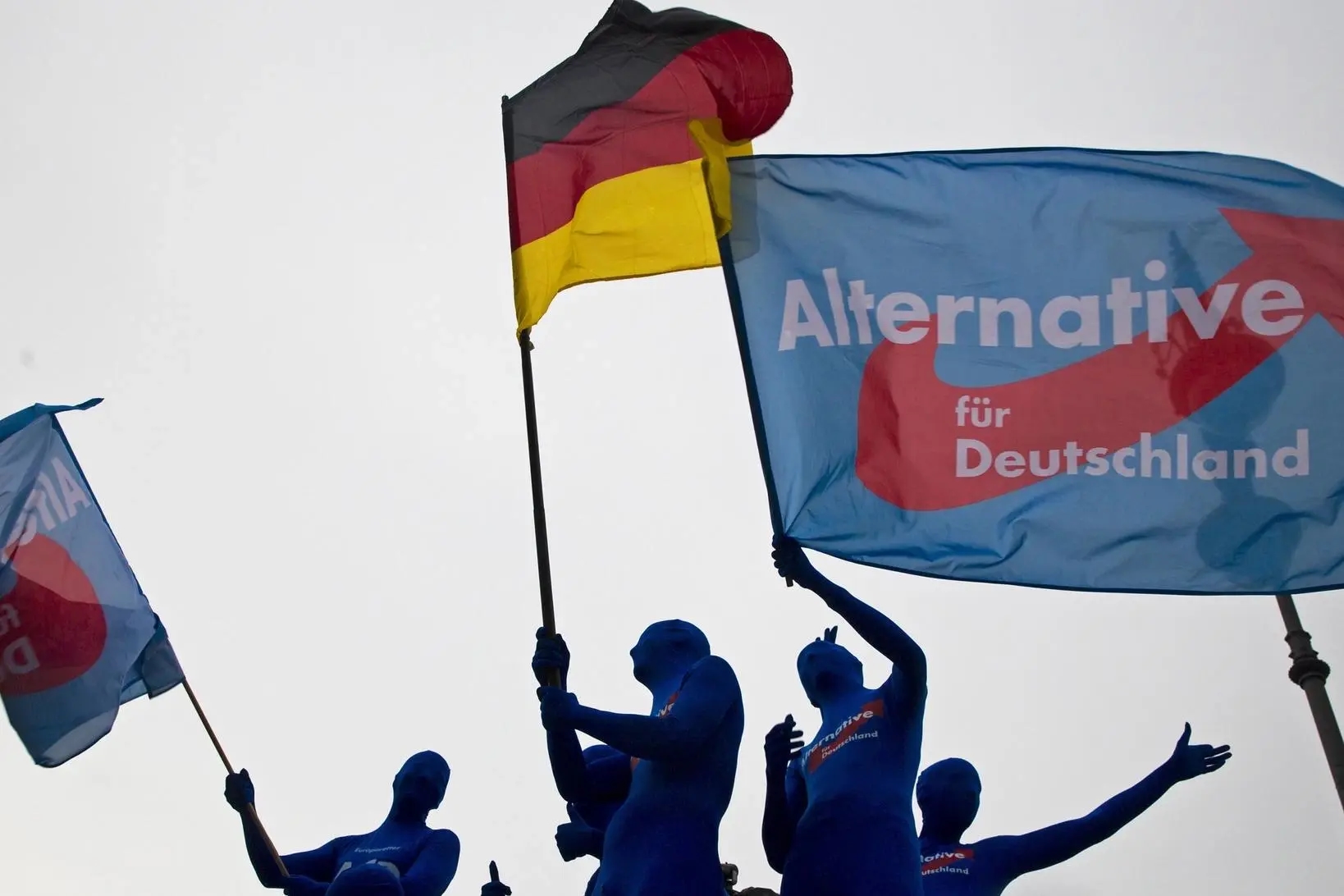

For the first time in its history, the far-right Alternative for Germany (AfD) party has a real chance of forming a regional government. On Sept. 6, voters in the eastern German state of Saxony-Anhalt will go to the polls, and experts are already describing scenarios in which the AfD would have enough votes to govern alone. In that case, the German political system’s “firewall” — the voluntary commitment of other parties not to cooperate with the radical right — would prove powerless. The AfD’s rise to power even in a state as small and economically weak as Saxony-Anhalt could cause serious problems for Berlin — including in the key areas of defense and security.
The “plan for Germany” is under threat
In Germany, a regional government cannot directly influence the nation’s foreign or defense policy. This is the exclusive prerogative of the federal center, in the form of the Bundestag and the government. That said, the AfD makes no secret of its opposition to weapons deliveries to Ukraine and to broader European rearmament plans. The party describes Berlin’s actions as a “course toward war” and demands “the restoration of partnership with Russia.”
Even if a party representative were to take the premier’s seat in Magdeburg, they would be unable to change Germany’s current geopolitical course. Moreover, the authors of Germany’s Basic Law anticipated the possibility of conflict between the federal center and a state, embedding protective mechanisms in two separate articles.
Article 37 allows the federal government to apply coercive measures in the event that local authorities refuse to follow a national decision. Additionally under Article 85, the federal government may issue direct instructions to the states within the framework of so-called “federal supervision.” But the process isn’t simple.
If an event in Europe were to trigger NATO’s Article 5 mechanism, Germany’s civilian authorities and military would begin implementing the Operational Plan for Germany (OPLAN DEU) — a set of mobilization and logistics measures that include the redeployment of large military contingents and equipment from western and southern Europe to the east, and Berlin’s allies would be counting on the use of German territory as a key hub for defensive operations. Although the exact routes for convoy movements are classified, several factors suggest that Saxony-Anhalt has been assigned an important role in such plans.
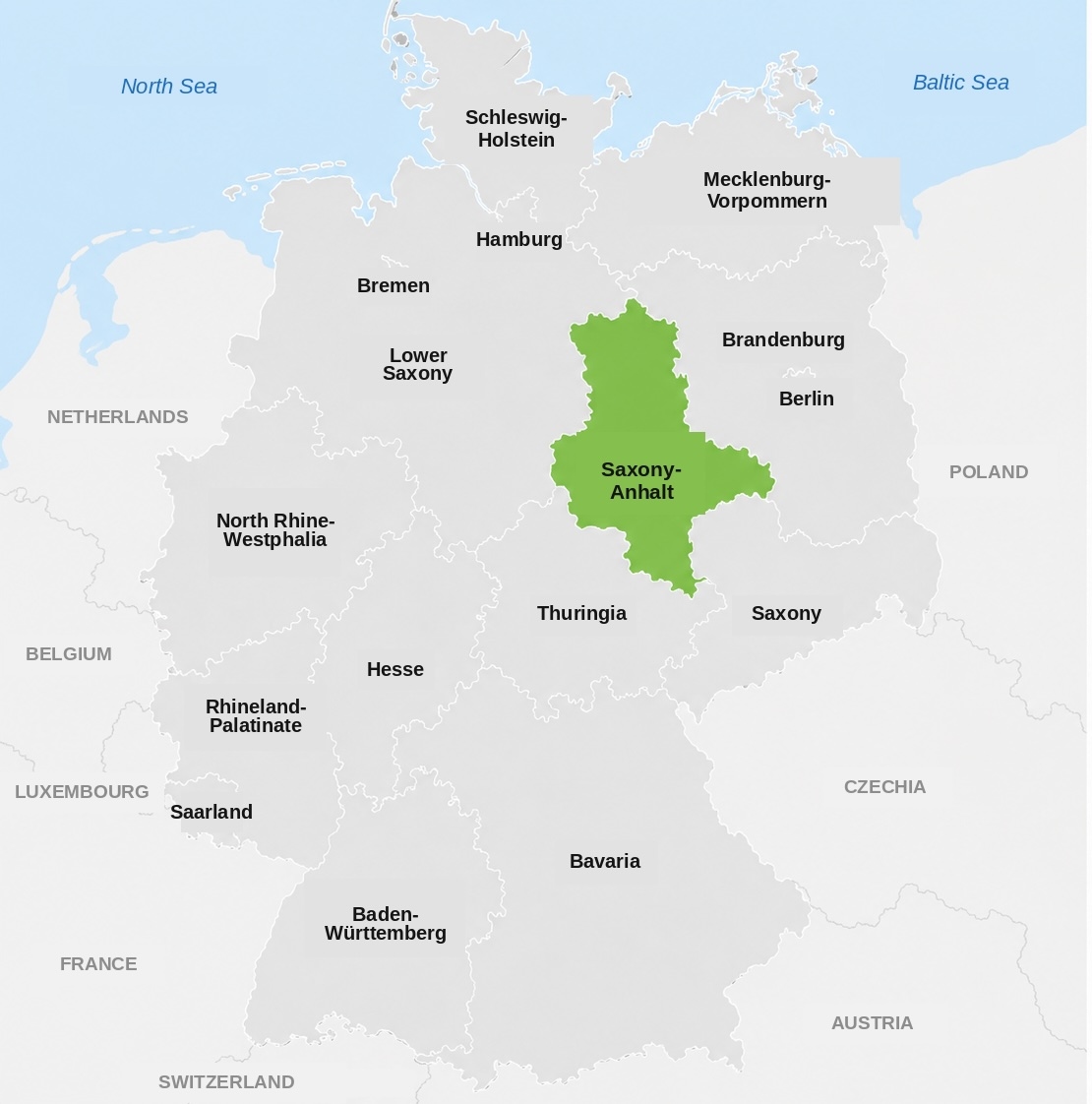
First, the geographic location of the state is perfect, as it sits halfway between the western part of the country and Poland. As a result, virtually the only route for a rapid response runs through Saxony-Anhalt. After all, numerous key Bundeswehr bases and logistics centers are located in and around the state.
Second, this region has in recent years undergone large-scale rehabilitation of its rail network, autobahns, and secondary roads. Many of them are now considered to be among the best in Germany. Plans through 2029 call for further modernization of the central rail hubs in Magdeburg and Dessau, as well as capacity expansion on the Magdeburg–Berlin route.
A state government, if it chooses, could significantly slow down military convoy movements at precisely the moment when every hour counts. For example, a hypothetical premier of Saxony-Anhalt who opposes “escalation” and calls for “seeking compromises at the negotiating table” could refuse to issue the permits required for heavy — and especially tracked — military vehicles to pass through the region, as the issuance of such permits falls within the competence of the relevant state authority. In addition, military convoys are required to move exclusively with a police escort whose purpose is to close off civilian traffic, and law enforcement agencies are subordinate to local authority.
A state government could significantly slow down military convoy movements at the very moment when every hour counts
Finally, decisions about the use of regional infrastructure — such as allocating land for tent camps and ensuring supplies of electricity, water, and fuel — are made locally, not at the federal center. Even the exchange of information between central command structures and the operations hub in Magdeburg could be significantly hampered.
There is no doubt that in an emergency, Berlin would immediately invoke its powers under the relevant articles of the Basic Law, and it is also fair to assume that not every senior police officer would agree to openly sabotage defensive measures. But precious hours — or even days — could still be lost, creating grave ramifications for the defensive strategy of both Germany individually and NATO as a whole.
Red tape as a weapon
The reputation of German bureaucracy is renowned far beyond the country’s borders. On one hand, the meticulous observance of the letter of the law and strict adherence to procedure guarantee a functioning rule-of-law state, reducing the actual power of those in positions of authority.
On the other hand, what makes the system stable simultaneously renders it vulnerable to legalistically legitimate, functionally pointless legal challenges. Although the AfD’s core political demands are unachievable without the approval of the Bundestag and the federal government, authorities at the state level possess all of the necessary mechanisms to make life considerably more difficult for the chancellor and their ruling coalition in Berlin.
A state is a significant player on Germany’s political field. The Bundesrat, the chamber of the states, approves nearly 40% of the laws passed by the Bundestag — and that approval is far from automatic. Since the Federal Republic’s founding in 1949, the Bundesrat veto has been used more than 100 times.
Moreover, some initiatives approved by the government and the upper house of parliament — such as recent payments to the public that required co-financing from the states — were never unblocked. And even though Saxony-Anhalt has only four of the Bundesrat’s 69 seats, this by no means implies legal weakness.
Presently, AfD parliamentary groups in the Bundestag and the state parliaments frequently pressure the executive and legislative branches with a barrage of motions, bills, and inquiries. These often lack any legal basis, but the system is obliged to respond to them.
For the AfD, this is an opportunity to demonstrate activity to its voters and convince them of its own effectiveness as the “only genuine opposition.” Moreover, around 7,000 AfD inquiries concerning the state of critical infrastructure and the country’s defense between 2020 and 2025 raise serious concerns among politicians and journalists.
Armed with votes in the Bundesrat and a new lever of influence, the AfD could well push this process to the point of absurdity, creating tangible stress for government administration. A state is what is known as a “constitutional body,” meaning it has the right to file a complaint with the Federal Constitutional Court. Under the unwritten rules of the game, a state government hardly ever resorts to this instrument — only in cases where the state’s rights have been seriously violated and numerous mediation councils with the federal center have yielded no result.
Statistically, state lawsuits account for just 1% of all cases examined by the Constitutional Court, and referrals to the court to review the legality of a given federal law are almost as rare — in the range of two to three per year. However, there are no legal limitations on the number referrals that can be submitted, meaning that a state under AfD rule could well disregard the unwritten rules and flood the Constitutional Court with challenges to any law passed by the Bundestag. The focus would be, first and foremost, on the issues most sensitive to a radical electorate: the entry and residence of foreign nationals, refugee admissions, environmental policy, and funding for renewable energy development, gender equality programs, and measures to strengthen European unity.
A state under AfD rule could flood the Constitutional Court with challenges to any law passed by the Bundestag
Blocking tax legislation would also theoretically be possible, posing a potential threat to the smooth functioning of the country’s fiscal system. Admittedly, federal laws are not subject to suspensive effect — meaning their entry into force would not be suspended on account of a pending complaint. Still, a mass attack on the Constitutional Court would inevitably affect its productivity and, indirectly, the functioning of government bodies.
A state also has the right to file a so-called urgent application, which would indeed effectively block a law until a final decision is reached. As a rule, the Constitutional Court grants such an application only in exceptional cases of serious harm to the state and its residents, but here there is ample room for legal interpretation and hairsplitting.
Finally, while four seats in the Bundesrat represent a mere 3% of the total membership, even these could become a “golden share” under certain conditions. The AfD’s appearance in the Bundesrat as the ruling party in its state would further legitimize the far-right party, and in the event of a serious conflict between states or a deadlock in the body, one side might not be able to resist the temptation to form a temporary alliance with the AfD in order to secure victory in the dispute with the help of Saxony-Anhalt’s votes.
Reshaping the system
The intense focus of foreign — and indeed many German — observers exclusively on federal politics is understandable. The state level may seem dull and unimportant, but in Germany’s federalist model the region plays a significant role in the implementation of policy. The state commands numerous levers of government administration, and here, the AfD would obtain tangible opportunities to change a great deal if it were to come to power.
All school-level education, along with a significant share of higher education, is a state-level responsibility. In Germany, a teacher is not required to follow the textbook to the letter and enjoys considerable freedom in shaping lesson concepts, but a hypothetical AfD-led government in Saxony-Anhalt would be quite capable of reformatting the educational process.
The party’s attention is focused primarily on the subject of “history,” and it makes no secret of its rejection of the form of historical memory and perception of past events that has developed in the Federal Republic. Instead, it would prefer a departure from the sense of guilt — or more precisely, collective responsibility — of the German people for the crimes of Nazism, as well as from the negative assessment of the militarism of the Second Reich, the colonial period, and a number of historical figures from the last 150 years.
Ideally, the AfD wants to foster the development of German patriots who are proud of their country and do not dwell on the dark pages of its history. This approach could be reflected in new curricula, which teachers are not entitled to ignore.
The AfD wants to raise German patriots who are proud of their country and do not dwell on the dark pages of its history
The state Ministry of Education would also be able to exert sufficient administrative and financial pressure on schools and universities to shut down initiatives aimed at combating racism, xenophobia, homophobia, and sexism. The AfD has an extremely negative attitude toward gender equality and diversity, feminism, and the use of gender-neutral language, meaning all of these could become a thing of the past in the area under its authority.
Admittedly, under such a scenario, the human factor would play a considerable role. Would thousands of teachers, officials, and administrators be willing to comply with the new rules of the game? This is where the second important set of state-level powers comes into play: personnel policy. Saxony-Anhalt has approximately 115,000 public-sector employees — 12% of the entire working-age population — and in a region with high unemployment, low wages, and very poor prospects on the open labor market, some administrators may choose to adapt to the new realities rather than risk being dismissed. In the five years before the next elections, the AfD could well appoint “ideologically compatible” personnel to senior and mid-level positions. This also applies to the state Center for Political Education, an important government body promoting democracy, which the new government could restructure beyond recognition.
Finally, the state government controls the police and the Office for the Protection of the Constitution — the body that, back in November of 2023, classified the AfD’s state organization in Saxony-Anhalt as “definitively right-wing extremis.” Should the AfD come to power, it may be tempted to exact revenge on the agency. Meanwhile, the state police have already been mired in scandals on multiple occasions involving the discovery of racist and antisemitic messages in internal chats, while year after year, human rights activists record an increase in cases of police brutality.
Even worse, it is not inconceivable that some local police officers would welcome “a firm hand” in power. In addition, the state Interior Minister has the authority to block individual law enforcement operations, and a hypothetical AfD minister would undoubtedly make use of that privilege.
Not least, the emergence of an AfD-led government even at the state level would deal a crushing blow to the firewall. Germany’s Basic Law explicitly requires the states to cooperate with one another. Without this, German federalism would simply be unworkable. In practice, the regions are genuinely bound by political ties — from the Bundesrat, where the mode of cooperation is different from that in the neighboring chamber of parliament, to the format of joint conferences of relevant state ministers. Currently, such conferences are held in 21 areas — from meetings of state premiers to forums of interior, economics, justice and transport ministers.
The AfD’s rise to power in Saxony-Anhalt could provide the final contribution to the “normalization” of the far-right party on a wider scale.