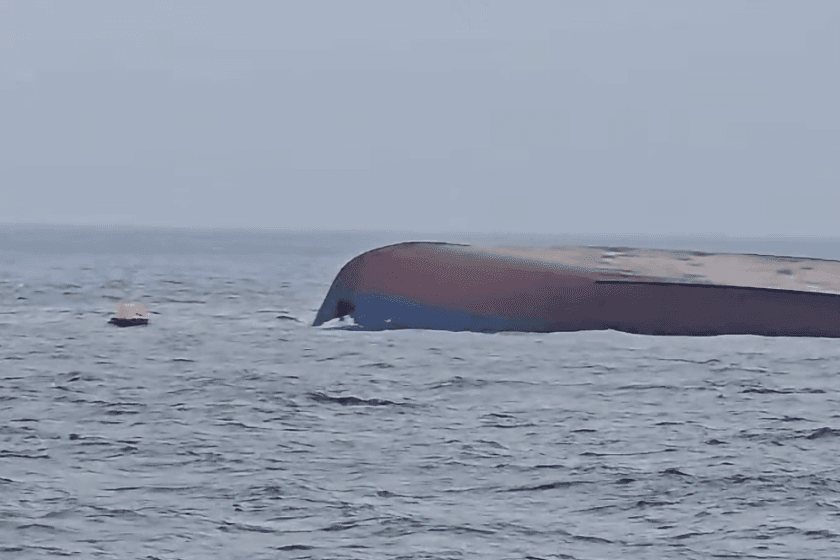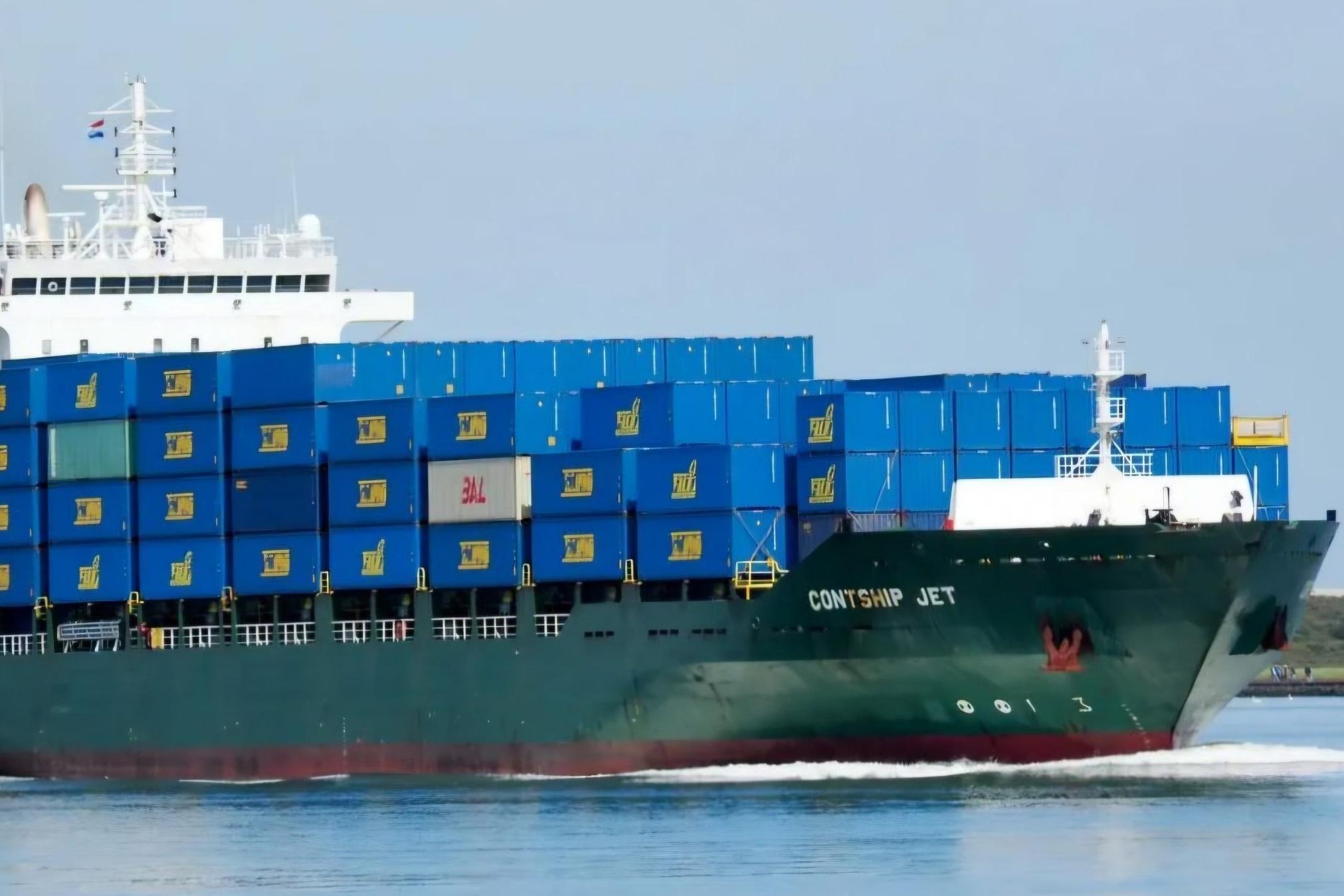
On Oct. 28, naval drones attacked a container ship in the Black Sea off the coast of Bulgaria, Reuters reported, citing the country’s Defense Minister Dimitar Stoyanov. Data from the Starboard Maritime Intelligence service examined by The Insider indicates that the vessel is the Contship Jet (IMO 9348625), which sails under the Liberian flag and is owned by the Greek company Sevilla Maritime Co. Since the beginning of October, at least nine civilian vessels have been attacked off the coasts of NATO members Bulgaria and Romania.
According to Stoyanov, “A container ship was hit...with three naval drones, approximately 21 miles southeast of Shabla.” As Reuters notes, the container ship was in Bulgaria’s exclusive economic zone at the time of the attack. A source in the maritime security sector told the outlet that the ship’s crew had been evacuated.
According to Starboard data examined by The Insider, the Contship Jet left the Israeli port of Haifa on Oct. 24 and was heading to the Romanian port of Constanta. The attack on the merchant ship took place on the day of an emergency meeting between the defense ministers and chiefs of the general staff of Turkey, Bulgaria, and Romania in Sofia – a gathering focused precisely on the safety of civilian shipping in the Black Sea.
Against the backdrop of frequent attacks, Romania proposed that NATO’s Black Sea countries create a joint command to protect against drones. In addition, NATO spokesperson Allison Hart said that the alliance will strengthen its grouping of maritime patrol aircraft and drones in the region.
However, as military analyst David Sharp explained to The Insider, ordinary patrolling will not help protect civilian ships from drones. As Sharp noted:
“Patrolling is more of a demonstration of presence so that the adversary does not get too bold. Of course, you can detect drones without destroying them and report the sighting to all ships in the area, including civilian ones. But sounding the alarm will not help here: at most, there might be time to put everyone into lifeboats. To truly protect civilian shipping, it is necessary to create a large grouping of ships and aircraft that will closely scan this part of the sea and destroy emerging threats. So everyone considering creating such groupings needs to answer the question of how far they are willing to go. Protecting civilian ships will require political will and specific decisions.”
Sharp stressed that NATO countries have the technical capabilities to counter even advanced naval drones, but the absence of a political decision to take on the protection of civilian shipping is explained by the alliance members’ fear of escalation with Russia:
“Civilian ships cannot protect themselves; they are too slow. They are a defenseless target. However, a political decision to cover civilian shipping would already imply, to some extent, participation in the war. You would have to hunt for drones and shoot at them, and also risk a drone hitting you. NATO avoids this. In Romanian or Bulgarian waters, ships would have to be covered, and aggression countered, but such actions in international waters amount to participation in combat operations.”
Notably, an exclusive economic zone is not considered part of a country’s territory, meaning that a hypothetical operation to destroy a drone like the one that struck the Contship Jet could be interpreted by an adversary in a variety of ways. As Sharp explains:
“When a sea drone operated by an unknown actor is sailing about its own business in neutral waters and you destroy it, some doubt arises: if it is not threatening you and did not enter your waters, on what grounds are you destroying it? Reasons to take defensive action appear only if it is clearly attacking a civilian ship.”