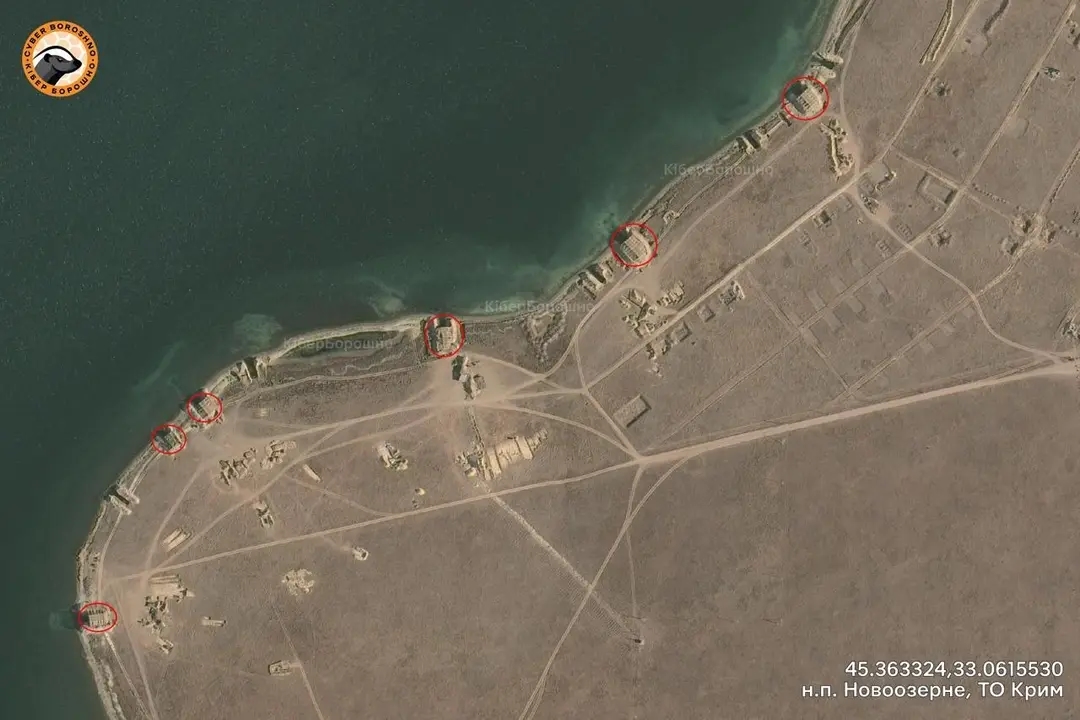
At least 21 protected shelters have been built on the shore of Lake Donuzlav in Russian-occupied Crimea. They are likely intended to protect Russian naval drones.
The suspected base was first identified by the Ukrainian open-source intelligence (OSINT) project CyberBoroshno, and naval researcher H. I. Sutton later analyzed satellite imagery of the site. Radio Free Europe/Radio Liberty’s project Krym.Realii highlighted their findings in a report on Sept. 4.
CyberBoroshno first reported the existence of the structures near Novoozerne on Sept. 1. The project’s analysts said the hangars were likely intended to store unmanned surface vessels (USVs) — remotely operated or autonomous boats.
The analysts said Russian forces have not yet been seen using these drones extensively in combat, but the construction of specialized infrastructure may indicate preparations for their future deployment. Using CyberBoroshno’s findings, H. I. Sutton examined satellite imagery of Donuzlav and counted at least 21 shelters at two sites along the lake’s southern shore.
According to his analysis, construction of the first eight shelters began in February 2026, while another eight appeared soon afterward. The second site was later expanded to 13 shelters. Roads are seen leading up to the shelters, allowing boats and equipment to be transported to the water. The shelters could be used to store, prepare, and launch the drones.
On Sept. 2, one day after CyberBoroshno published its findings, the Ukrainian Navy reported that it had destroyed a Russian Kama unmanned surface vessel near Snake Island. It is not currently known where the craft was launched from.
Russia officially unveiled the Kama for the first time in June 2026. According to its stated specifications, the vessel can operate up to 700 kilometers from its base and carry a payload of up to 600 kilograms.
Russia has already used naval drones in its war against Ukraine, but so far only in limited numbers, according to a source interviewed by Krym.Realii who previously served in Ukrainian military intelligence. The source said most of the military unmanned boats Russia has publicly displayed remain at the testing or prototype stage, with no evidence that they are being produced at scale.
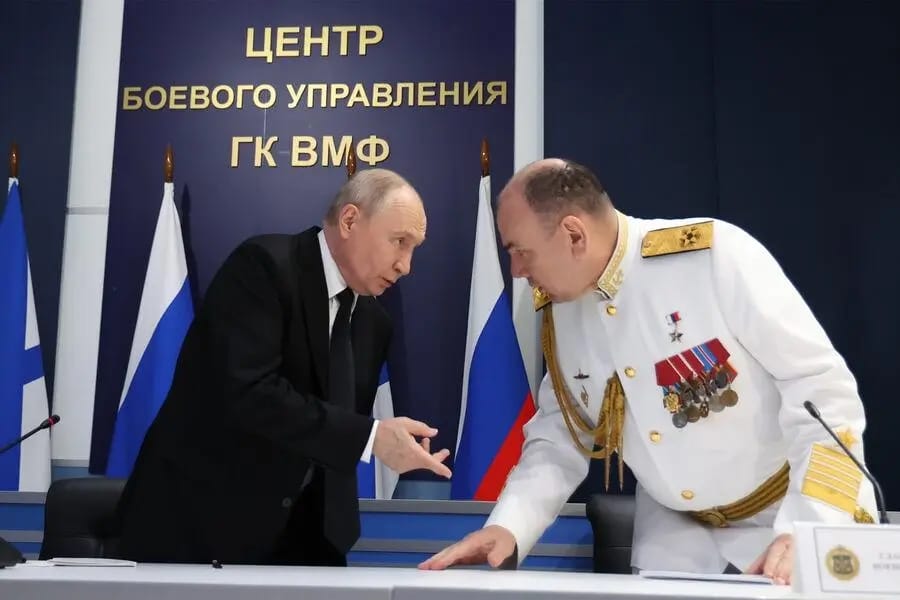
In July, Russian Navy commander-in-chief Alexander Moiseyev announced the country was building its first 500-metric-ton unmanned vessel for hunting submarines and other underwater targets. The announcement drew criticism from several pro-war Russian Telegram channels and commentators, who argued that the Russian Navy should first establish mass production of small, inexpensive attack drones of the kind Ukraine has used extensively against Russian ships and infrastructure.