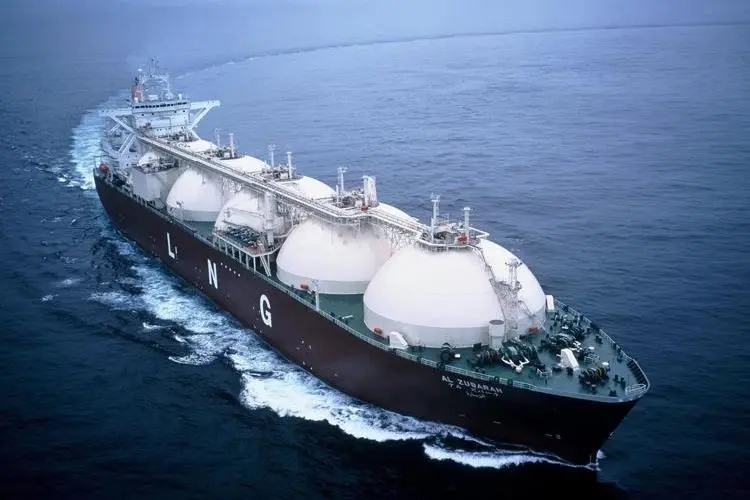
Over the six months of the U.S.-Israeli war with Iran, Qatar’s liquefied natural gas (LNG) exports have fallen by 96%, with Reuters reporting that the blockade of the Strait of Hormuz has brought gas shipments to an almost total halt.
Before the war began in late February, Qatar accounted for around 20% of global LNG exports. However, since March, the country has managed to ship just 18 LNG cargoes, compared with 509 during the same period in 2025. According to Reuters’ estimate, Qatar has lost around $24 billion.
As Andreas Schröder, head of gas analytics at ICIS, told The Insider, EU countries are likely to enter the heating season with a gas deficit. Total storage inventories are expected to be 5.7 billion cubic meters below target.
“The forecast is based on the assumption that the Strait of Hormuz will remain closed until March 2027, but the actual duration of the blockade is unknown. This leaves market participants having to make educated guesses. At present, it appears that markets are increasingly pricing in a scenario of a longer closure of the Strait of Hormuz.
Replacing Qatari LNG with alternative supplies to Europe will be difficult. Between March and July 2025, Europe accounted for 67% of U.S. LNG exports. However, during the same period in 2026, that share fell to 51%. At the same time, East Asia’s share (China, Japan, South Korea and Taiwan) of U.S. supplies rose from 10% to 16%, while Asia’s overall share increased from 16% last summer to 29% this summer.
ICIS has revised its base-case scenario for its gas forecast for Western and Central Europe (12 countries): the peak storage level has been lowered from 81% to 75%, reflecting weak injection rates in 2026. Under the updated base case, storage inventories will peak at approximately 5.7 billion cubic meters lower and six days earlier. An 80% level remains achievable, but only with a more favorable balance of supply and demand.
Countries with substantially lower average storage levels in Q2 2026 than in Q2 2025 will enter the winter with a deficit. Lower starting inventories ahead of winter increase Europe’s vulnerability to competition for LNG, cold snaps, and supply disruptions.
The prolonged absence of Qatari LNG is having a significant impact on European gas prices, which will be felt throughout the winter of 2026/2027. According to the ICIS forecast, as efforts to fill storage facilities intensify in the autumn, European gas prices could rise to €80/MWh, compared with the current level of €64–68/MWh. A year ago, gas prices were half as high, at €31–32/MWh.”
Natasha Fielding, a manager at the price reporting agency Argus Media, told The Insider that EU gas storage facilities are currently 63% full, compared with a five-year average of 81%.
“With gas stocks lower than usual, Europe will have to rely more heavily on LNG imports during the winter and may be forced to compete more aggressively with Asian buyers for available cargoes.
There is limited scope in the European gas market to significantly increase domestic production or pipeline imports to make up for the shortfall in Qatari LNG supplies. However, the recent expansion of LNG export capacity in North America is helping to partially offset the loss of supplies from the Persian Gulf.
The risk of gas consumption restrictions being introduced in Europe affecting households, the power sector, or critical industries, is low. However, gas demand could fall as a result of high prices. Higher electricity bills are encouraging households to save energy and could lead to reduced production in gas-intensive industries, prompting utilities to generate electricity from coal instead of gas.”
In early August, Reuters reported that natural gas inventories in European storage facilities had fallen to their lowest levels since records began in 2011. At the beginning of August, storage facilities were less than 58% full, 12 percentage points below the level recorded during the same period a year earlier.