Shipments of oil products of Russian origin reached their highest level in 12 months in April, according to The Insider’s review of the monthly report The Rise of the Shadow Fleet compiled by the analytics provider MarineTraffic. Seaborne oil shipments also rose to their highest level since the start of the year.
According to the analysts, total oil product shipments reached 4.4 million barrels in April. Of that amount, roughly 2.8 million barrels were Russian, the highest figure in the past year.
The figure is still relatively small compared with Russia’s overall energy exports because it includes only products derived from oil refining, such as diesel, fuel oil, and naphtha, mostly intended for India.
Meanwhile, Russia’s oil exports carried by the “shadow fleet” reached approximately 67 million barrels in April — the highest level in three months. The previous peak was observed in January, at 72.7 million barrels, followed by a sharp drop and then a gradual increase to 50.7 million barrels in February and 64.1 million in March.
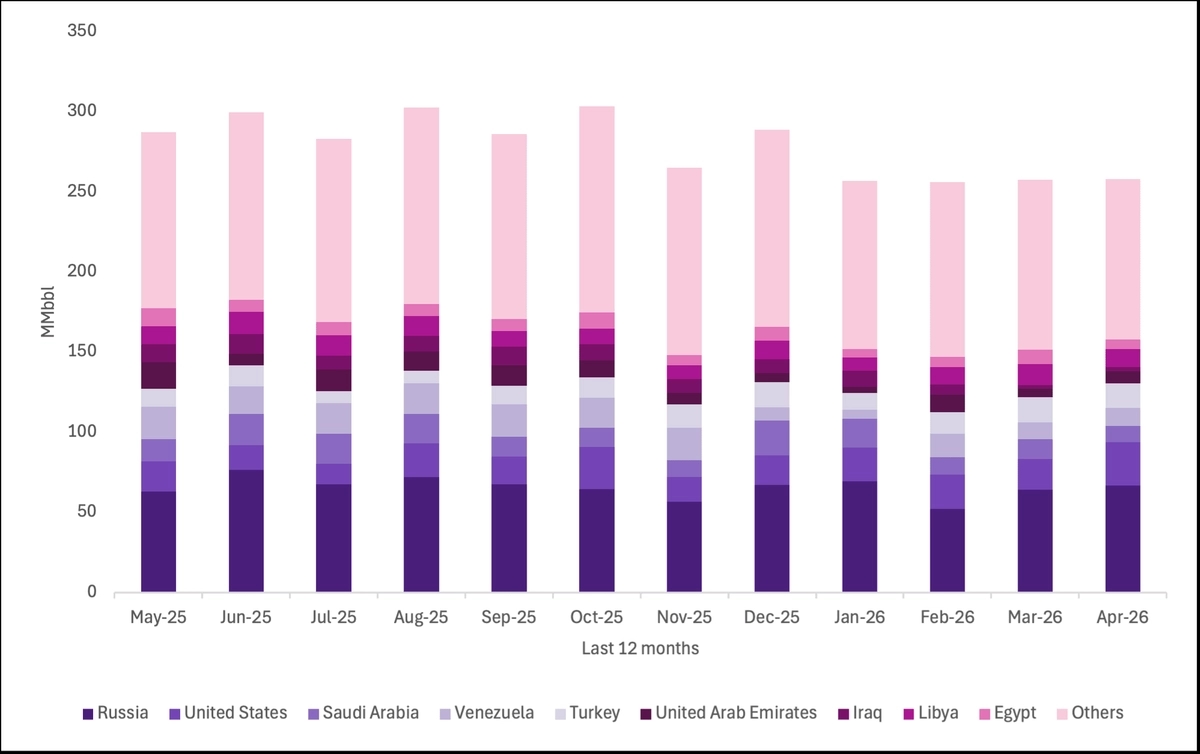
Similar estimates of rising oil exports were also provided by the International Energy Agency, cited by Reuters. Compared with March, Russia’s crude oil exports rose by 250,000 barrels per day to about 4.9 million barrels per day, despite production cuts forced by Ukrainian drone strikes on refining and loading facilities.
The increase may have been driven by disruptions to energy supplies from Persian Gulf countries after export routes were blocked during the U.S.-Israeli war against Iran. Amid market turmoil, the U.S. Treasury Department allowed Indian refineries to buy Russian oil for 30 days in first week of the war and later lifted sanctions on sales of Russian oil and oil products loaded onto vessels before March 12.
The latter easing was designed to last one month, and the White House initially did not intend to extend it. Later, however, permission to sell Russian oil already loaded onto tankers at sea was issued again, this time until May 16.
U.S. President Donald Trump indicated this week that Washington could extend the permission once more. Asked by reporters whether the United States could do so, he said the White House would “do whatever is necessary” to stabilize oil prices and promised that energy prices would fall as soon as the war ends.
Since the start of the war in the Middle East, media outlets and analysts have repeatedly noted the economic benefits Moscow has gained from the suspension of exports from the region. In early May, Bloomberg reported that revenue from Russian oil exports had risen to its highest level since February 2022, when Russia launched its full-scale invasion of Ukraine, while Russian fuel oil shipments to Singapore had reached a 10-year high.