On July 25, at a meeting with Vladimir Putin, Kazakhstan’s president Kassym-Jomart Tokayev proposed that Russia end its war in Ukraine. Meanwhile, however, The Insider found that Kazakhstan continues to serve as Russian defense manufacturers’ only source of beryllium oxide ceramics, a material essential for the production of military radars and for the homing systems used in Iskander missiles. Kazakh exports to Russia of products made from beryllium oxide ceramics increased severalfold after the start of the full-scale invasion of Ukraine, and given the nature of the recipient plants’ operations, the products have no conceivable use other than military applications.
Explored but not developed
Russia boasts some of the world’s largest proven beryllium reserves. The first deposits were discovered as far back as the 17th century, and today 35 of them are officially registered by the state. Until recently, however, Russia had neither developed these deposits nor mined them. As a result, it found itself unexpectedly dependent on imports of beryllium oxide.
Demand for the mineral in Russia has increased severalfold since the start of the full-scale invasion of Ukraine. Before 2022, Russia imported $1 million worth of beryllium ceramics from Kazakhstan annually; in 2025, the figure was approximately $8 million.
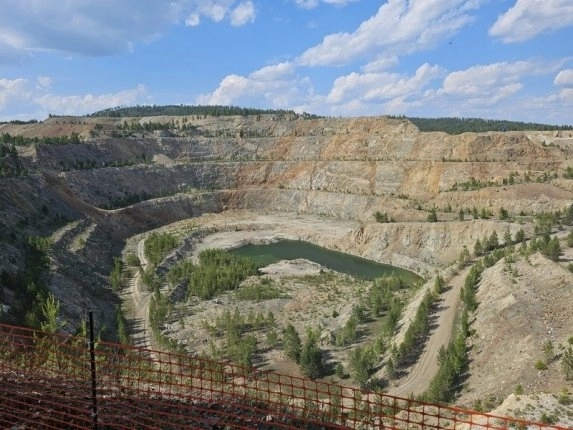
Efforts are being made to develop domestic production in Russia, and establishing domestic production of beryllium oxide is considered to be one of the key priorities of state policy. Saratov-based Bazalt promised to produce domestically made ceramics for Russia’s defense industry, but it is unclear whether the project ever came to fruition (the company has, however, successfully worked with metallic beryllium).
Local authorities said that development of a beryllium deposit in Buryatia was due to begin in 2026.
Why does the Russian military need beryllium oxide?
Beryllium oxide ceramics have very high thermal conductivity — among dielectric materials, only diamond conducts heat better. Moreover, ceramics made from this compound are strong and heat-resistant.
High-powered high-frequency equipment — both vacuum-electronic and solid-state — requires the dissipation and removal of excess heat. The heat-dissipating components must also be dielectric. This makes beryllium ceramics indispensable as substrates for microwave transistors and integrated circuits. Such electronic components are needed in various types of radars — both ground-based systems and those housed in missile seeker heads.
Electronic components containing beryllium are needed in various types of radars — both ground-based systems and those housed in missile seeker heads
Beryllium ceramics also have high chemical and radiation resistance and are transparent to microwaves, ultraviolet light, and X-rays. Several decades ago, beryllium was even used in household microwave ovens, but the practice was later discontinued due to its high toxicity.
Today, beryllium ceramics are used to make heat-dissipating insulators and substrates for high-power transistors and integrated circuits, as well as structural components of traveling-wave tubes for radar and other high-power microwave emitters. For example, beryllium components are used in a 1.2 kW traveling-wave tube that the Shokin Istok Research and Production Corporation proudly lists among its developments.
Along with klystrons and solid-state electronics, such tubes are used as sources of microwave radiation in military equipment. In particular, Istok developed seeker heads for air-to-air missiles and surface-to-air missile systems. Microwave devices for Russia’s S-400, Tor, Buk, and Kub air-defense systems, along with the Kinzhal naval air-defense system and the Pantsir air-defense missile and gun system were also developed by Istok.
Who sells beryllium oxide, and who buys it?
All beryllium ceramics supplied to Russia are manufactured by a single Kazakh company: Kaz Ceramics. The products are sold either by the company itself or by its affiliate, Zenit-K.
The ceramics were purchased by Russian military plants and their contractors, most of which are known to be involved in the development and production of high-power high-frequency equipment. In 2022–2025, the buyers included the following companies:
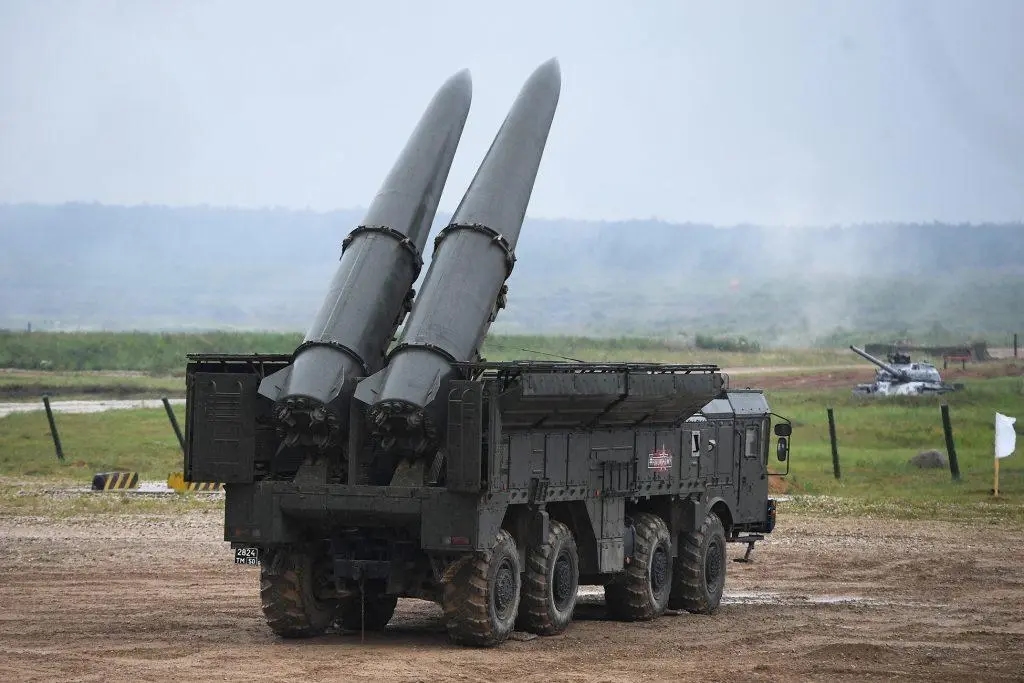
- Fazotron-VMZ (not under Western sanctions) manufactures M411146 units for 9M723 Iskander-M missiles (a high-frequency emitter that protects Iskander missiles against air-defense systems).
- JSC Research Institute of Semiconductor Devices (under EU and U.S. sanctions) manufactures components for Kh-59M2/M2A air-launched missiles (television guided seekers), a semi-active laser seeker and control unit for the Krasnopol-M2 "smart" artillery round, and components for the 72V6 combat vehicle of the Pantsir-S1 air-defense missile and gun system.
- JSC Fryazino High-Power Transistor Plant (under U.S. and Ukrainian sanctions).
- Pluton Design Bureau (not under sanctions).
- Shokin Istok Research and Production Corporation (under U.S., EU, Canadian and Ukrainian sanctions) — one of Russia’s leading developers of military microwave equipment, including radars for the Pantsir and Buk systems and the S-300 and S-400 systems, as well as broadband microwave amplifiers for the Sh-121 weapons-control radar system used on the Su-57 fighter jet.
- VZPP-S (under U.S., EU and Ukrainian sanctions).
- JSC Central Design Bureau of Instrument Engineering (under sanctions).
- Research Institute of Electronic Technology (under sanctions).
- JSC Iskra Plant Research and Production Enterprise (Ulyanovsk, under sanctions) — manufactures components for Kh-59M2/M2A missiles and the 72V6 combat vehicle of the Pantsir-S1 air-defense missile and gun system.
- Almaz Research and Production Enterprise (under U.S., EU, Canadian and Ukrainian sanctions) — manufactures the 92N6E and 96L6E radars for the S-400.
- JSC Research Institute of Measuring Instruments — Comintern Novosibirsk Plant (under U.S., EU and Ukrainian sanctions) manufactures radars for air-defense systems.
- JSC Degtyarev Plant (under U.S., EU, Canadian and Ukrainian sanctions) manufactures 9M333 missiles for the Strela-10M3 system.
- JSC Kontakt Research and Production Enterprise (under sanctions).
- JSC Pulsar Research and Production Enterprise (under sanctions).
- Metallurgiya Research and Production Enterprise LLC (under sanctions).
Kazakh media previously reported on shipments of beryllium substrates to the Belarusian Integral plant, one of the few companies within the Kremlin’s sphere of influence that continues to manufacture microchips for Russian military equipment (including Kh-101 and Iskander-K missiles). Notably, the Kazakh plant’s products are finished ceramic components — substrates that can only be used for a specific microchip or transistor, rather than for other purposes.
For unknown reasons, it was Kaz Ceramics’ shipments to Belarus that drew the attention of Kazakh law enforcement. A criminal case was opened, and a court found the company’s CEO and commercial director guilty of smuggling and illegal business operations (though both were granted amnesty). In effect, the Kazakh court classified beryllium ceramics as “dual-use goods” — despite the defense team’s insistence that the Belarusian Integral plant’s operations were entirely civilian.
The Insider has repeatedly reported on Kazakhstan’s role in supplying Russia with important industrial goods, including tantalum and chromium, high-precision measuring instruments, and machine tools. In all of these cases, however, the goods at least had a plausible civilian use. Moreover, they were often purchased by resellers or retailers as part of what at least appeared to be a broader industrial modernization effort serving both civilian and military purposes.
That is not the case here. The beryllium oxide ceramics supplied to Russia represent perhaps the first clear-cut case of explicitly military goods, including components intended for offensive weapons, making their way from Kazakhstan to Russia. It is also worth recalling that, in the early stages of the full-scale invasion, Kazakhstan briefly supplied Russia with drones made by well-known Chinese manufacturers (the drones were civilian models, but they were clearly intended for military use). Those shipments, however, were quickly halted.
Kaz Ceramics did not respond to The Insider’s phone calls or written requests for comment.