Three and a half years of sanctions and embargoes have failed to push Russian crude off the global market, even if the combination of measures has widened the price gap between Urals and global benchmarks to around $25. Still, amid a shortage of tankers and soaring freight costs, Urals cargoes are once again being transferred at sea onto supertankers.
According to Reuters, deliveries of Russia’s benchmark Urals crude have once again begun using ship-to-ship (STS) transfers to VLCC supertankers (200,000 tonnes or more). The reasons are rising demand from China, a shortage of available tonnage, and high freight costs. At the same time, supertankers have become more available for service as a result of the fact that part of the “shadow fleet” was freed up due to the sharp reduction in shipping through the Strait of Hormuz, along with the easing of sanctions on Venezuela.
Shipping Urals to China via the Suez Canal costs an estimated $20 a barrel – about $2 more than the route to India. Freight rates to India, meanwhile, surged in August because of risks to shipping.
Where Urals came from
The name of the grade comes from the historic oil-producing region around Russia's Ural Mountains (although the crude itself is produced mainly in Western Siberia and in the Volga-Ural basin). Urals is not an oil field but an artificial blend. Since the 1970s, it has been produced by a unified system of trunk oil pipelines, and today the system is operated by pipeline monopoly Transneft; in Soviet times, it was run by its predecessor, Glavtransneft.
The trunk pipelines simultaneously carry light, low-sulfur crude from the Khanty-Mansi Autonomous Area (Siberian Light, about 36° API and less than 0.6% sulfur) and heavy, high-sulfur crude from fields in the Urals and Volga regions (including Tatarstan, Bashkortostan, Perm Krai and Samara Oblast). Oil has been extracted there for decades and has had time to “age,” reaching sulfur content of up to 3%. As the two streams mix in the pipeline on their way to ports and export branches, they form a blended grade with an API gravity of 31–32° and sulfur content of 1.2–1.4%.
For comparison, Brent and WTI have API gravities of 38–40° and sulfur content of 0.2–0.4% or less, while Middle Eastern crude is similar to Russian oil when it comes to both measures. The Soviet Union began exporting the blend in the 1960s as a practical solution to the challenge of shipping dozens of different grades from widely scattered fields to various buyers. The standardization allowed Moscow to sell a uniform product while passing the cost of refining heavy, high-sulfur crude on to the end customer.
After the collapse of the Soviet Union, Urals not only survived as an export brand but also became the fiscal backbone of Russia’s entire oil industry. Its price was used to calculate the mineral extraction tax (and, until 2024, the export duty as well). Since 2016, Urals futures have been traded on the St. Petersburg Exchange.
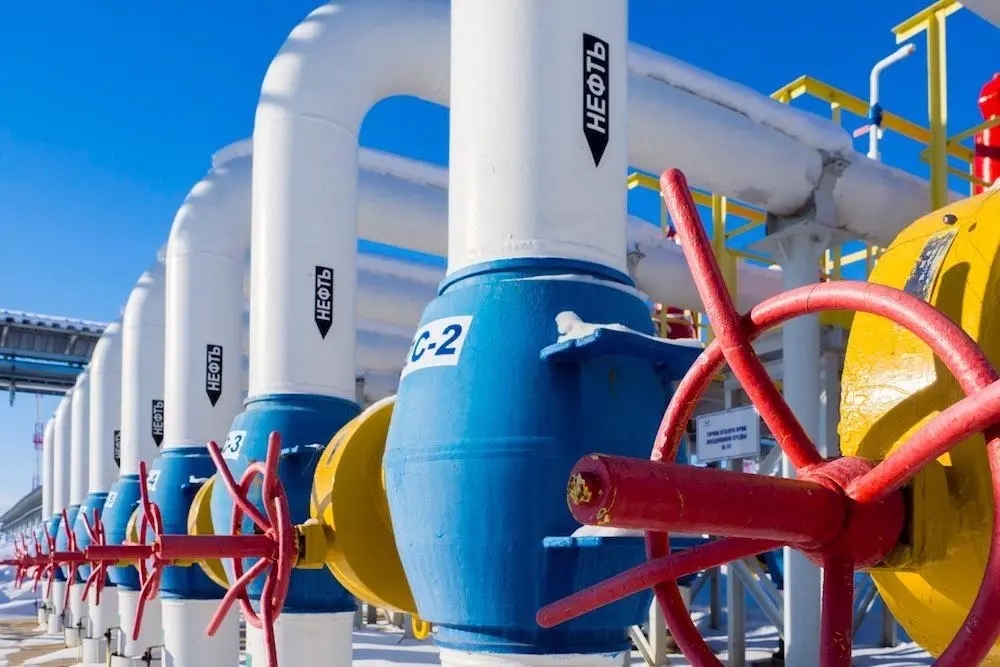
The key producers of the blend are Rosneft, Lukoil, Gazprom Neft, Surgutneftegas, and Tatneft. A significant share of the crude produced remains in Russia and is processed by domestic refineries. Most exports go through seaborne terminals – the Baltic ports of Primorsk and Ust-Luga, along with Novorossiysk on the Black Sea. The rest goes to Belarus, Hungary, and Slovakia via the southern branch of the Druzhba oil pipeline, built between 1960 and 1964 and expanded with a second line in 1974.
For decades, Urals was a grade tailored to European refineries built specifically to process this type of crude — an arrangement that proved a liability for Russia after 2022. Shipments to Poland and Germany ended in 2023, and the Czech Republic stopped importing Russian crude in April 2025, switching entirely to the TAL and IKL pipelines.
Who sets the Urals price, and why it matters to the Finance Ministry
Until 2022, the price agency Argus assessed Urals based on a survey of traders involved in CIF deals in Rotterdam and Augusta, Italy – that is, with delivery to the destination port rather than the loading port. This was the assessment used by the Finance Ministry. The average Urals price has been used in the formula for calculating Russia's mineral extraction tax (MET) since its introduction in 2002, and it later became the basis of the budget rule determining how much oil and gas revenue goes toward current budget spending and how much is saved in the National Wealth Fund (NWF) against a possible fall in prices.
After the start of Russia's full-scale invasion of Ukraine, the Urals pricing methodology gradually lost its relevance. An EU embargo on seaborne imports of Russian crude came into force on Dec. 5, 2022, but even before that, Argus announced that it would switch to an FOB assessment at Primorsk, Ust-Luga and Novorossiysk, while the CIF price in European ports would be calculated by adding estimated freight and insurance. In other words, the market for actual transactions shifted to the loading ports, while the familiar European benchmark became a theoretical construct.
From mid-January 2023, Argus competitor Platts, a division of S&P Global Energy, began publishing its own Urals assessment at Indian ports on a DAP basis, giving both the market and Russian officials an alternative price reference.
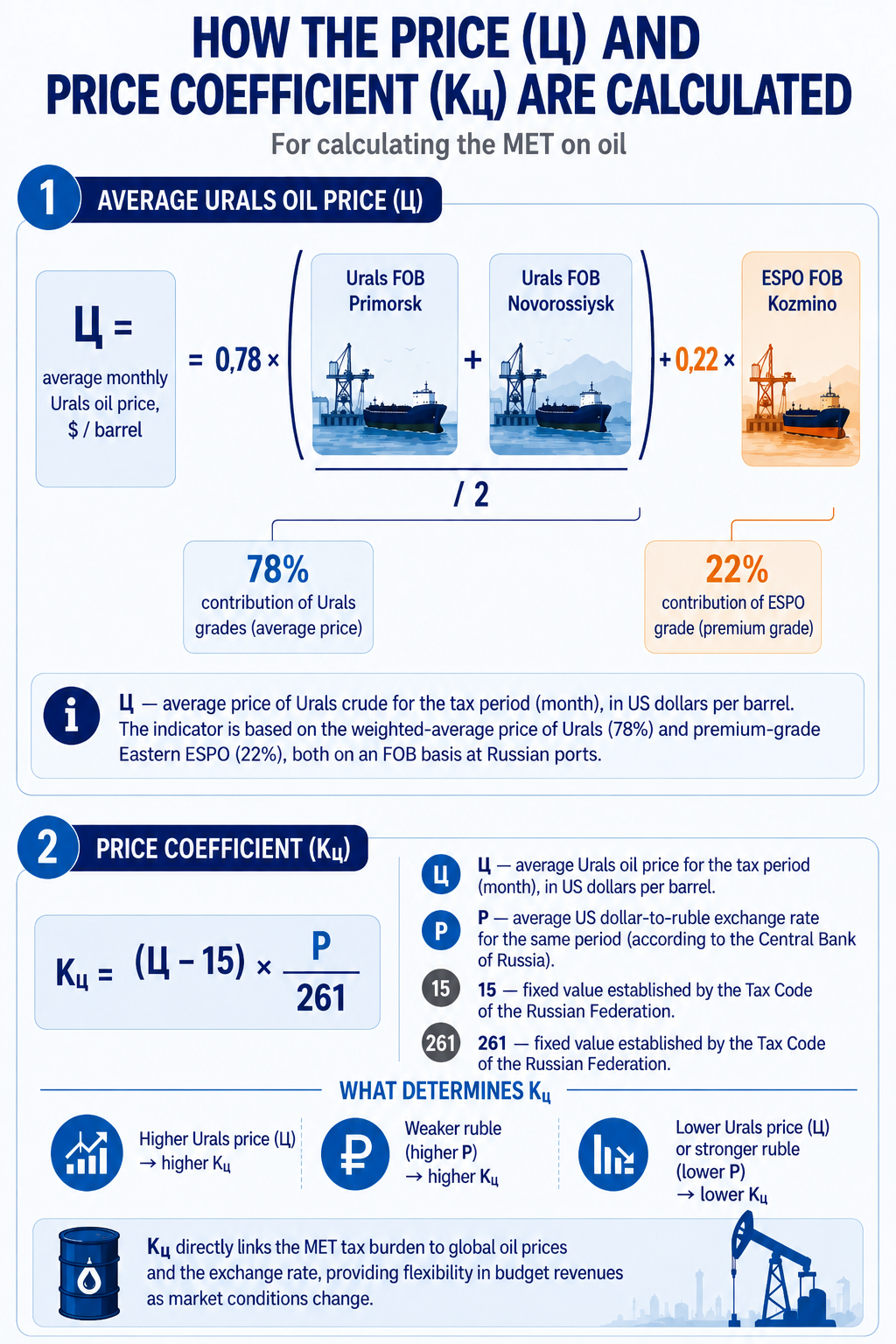
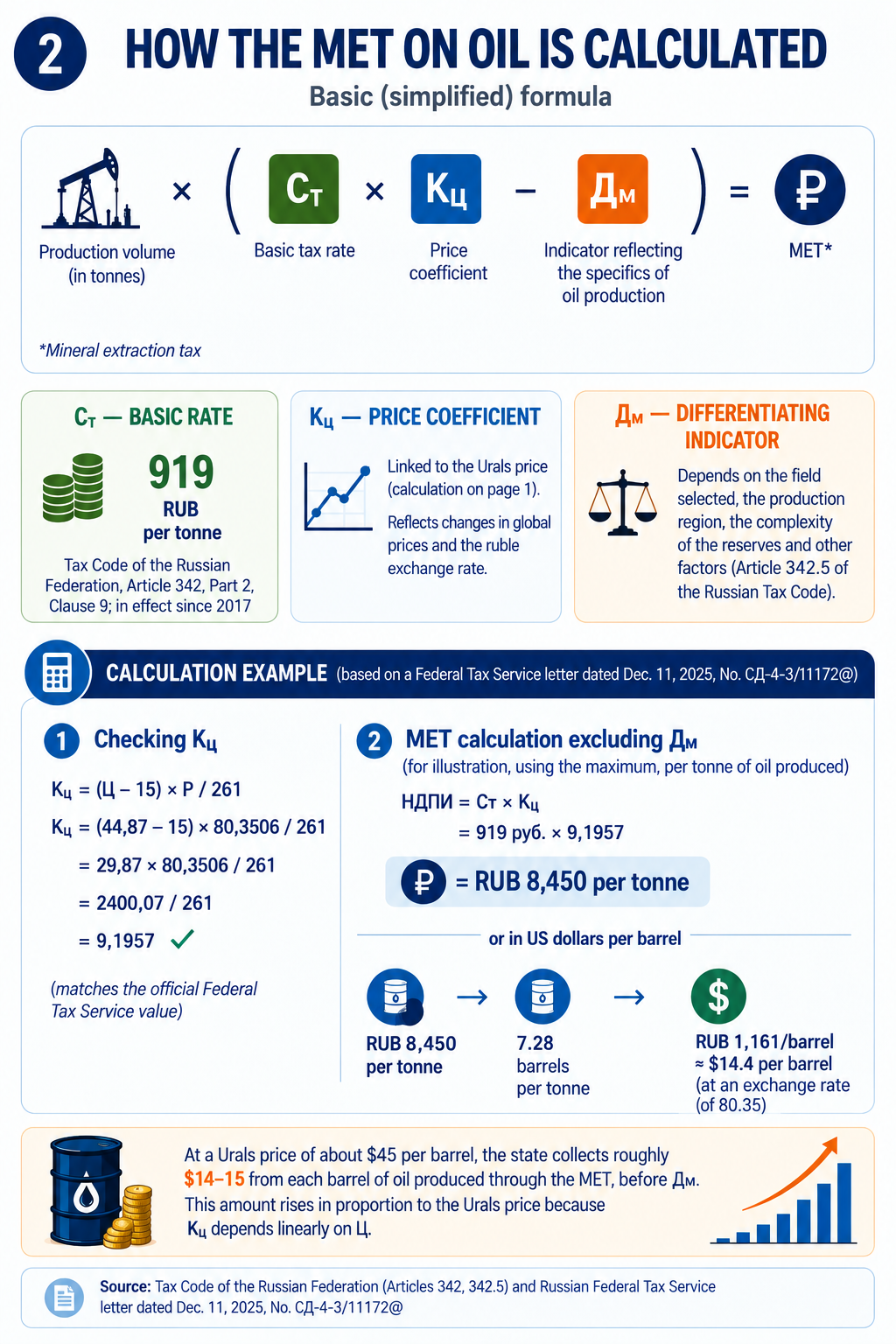
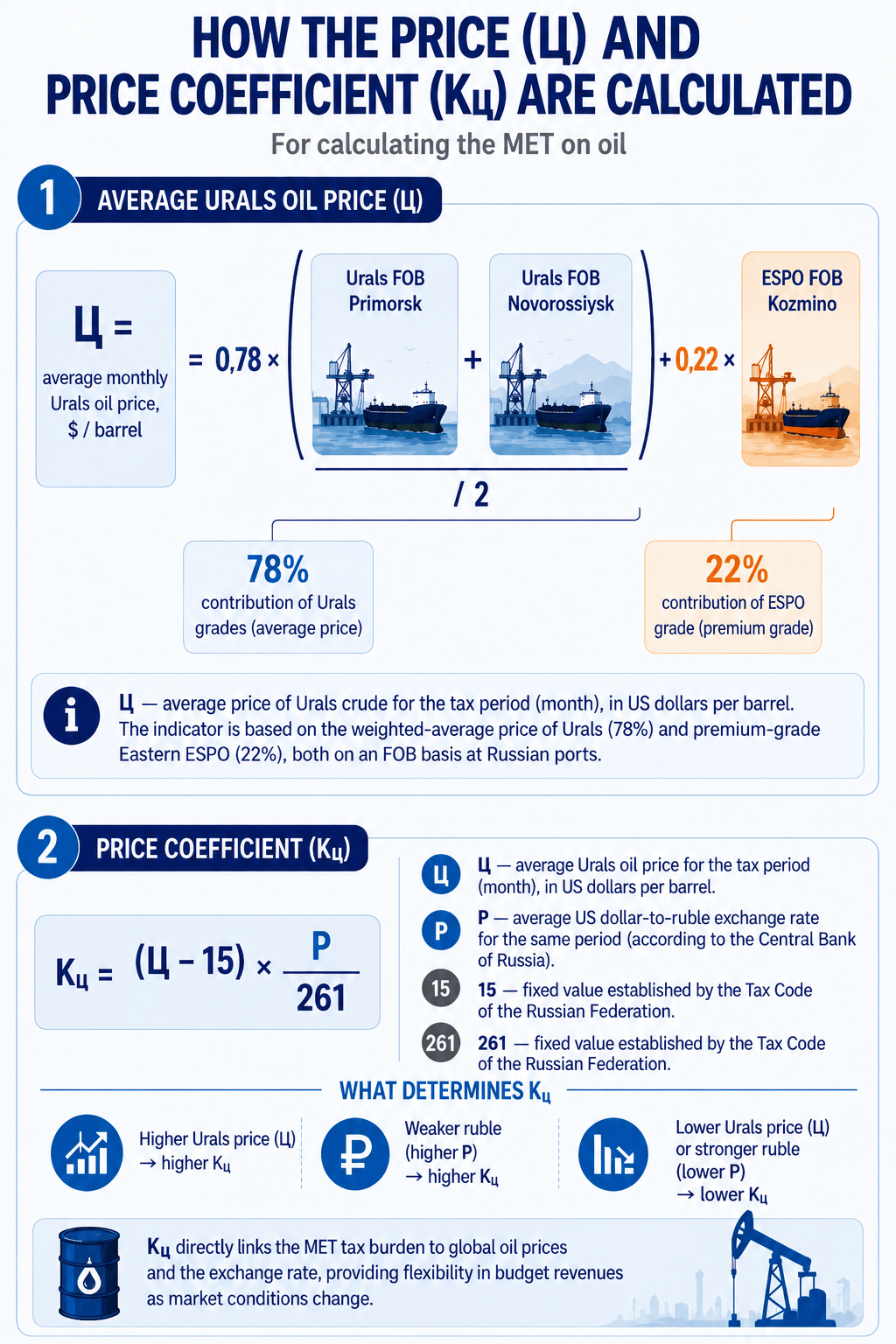
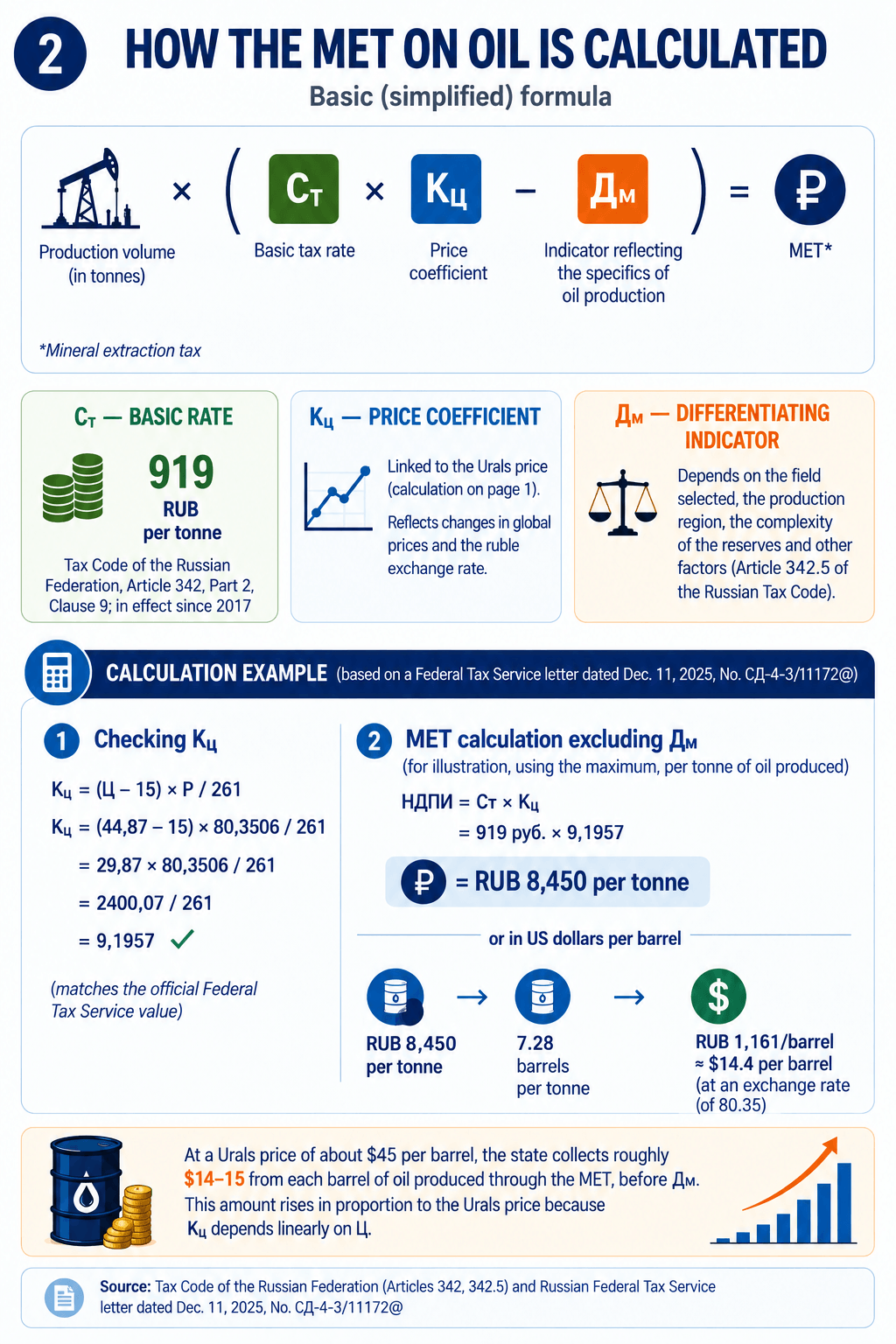
The tax formula was also changed. Starting from April 2023, the mineral extraction tax (MET) was calculated based on the actual Urals price, but with a floating floor set by the price of Brent crude. The discount fell from $34 a barrel in spring 2023 to $20 by September, and then to a projected $6 by 2026. The complicated formula was intended to prevent the Urals price used for tax purposes from falling too far.
From 2025, this mechanism was replaced altogether. The Urals price for tax purposes is now calculated as a weighted average of Urals FOB assessments at Primorsk and Novorossiysk, with a 0.78 coefficient, and the ESPO FOB Kozmino assessment, with a 0.22 coefficient. In effect, the Finance Ministry's formula serves as an acknowledgement that a genuine Urals market in the old, “European” sense no longer exists.
Urals and Brent: the history of a discount
Before the start of Russia’s full-scale invasion of Ukraine, the Urals discount to Brent was modest and easy to explain. A $1–3-per-barrel gap reflected the grade’s higher sulfur content and lower gasoline yield when refining heavier crude.
At times, however, the discount nearly vanished or even turned into a premium. In June 2020, for example, amid record OPEC+ production cuts and a local shortage of heavy grades in northwestern Europe, Urals traded at $2.35 a barrel above Brent. It was the largest premium recorded since September 1994, when price assessments were first published.
After February 24, 2022, Western buyers began avoiding Russian crude even before their governments imposed a formal embargo. As a result, by April the discount had exceeded $30 a barrel on a CIF Rotterdam basis, according to Argus, with some deals reaching a price difference of $35.
After February 24, 2022, Western buyers began avoiding Russian oil, fearing reputational risks
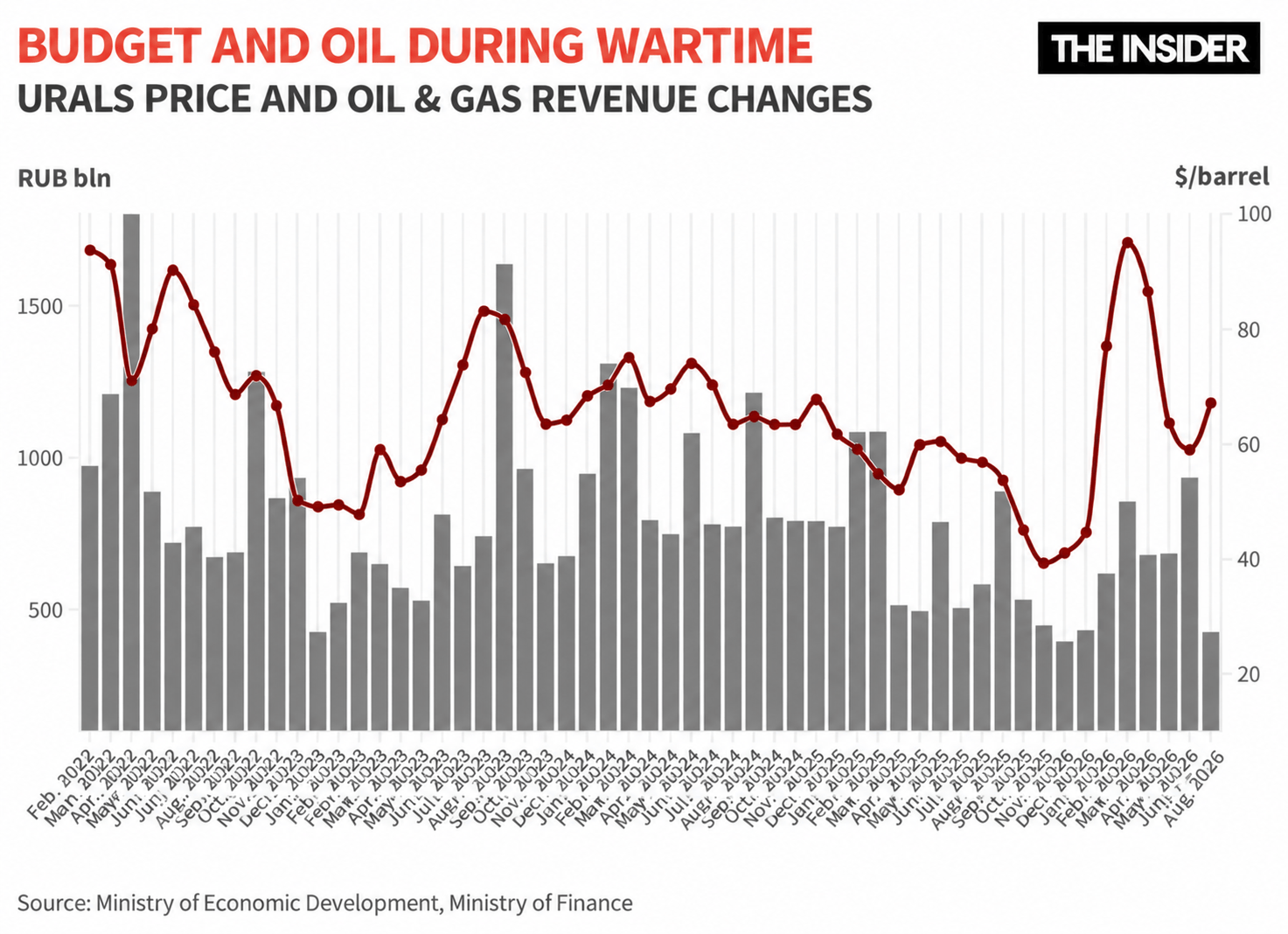
Starting from December 2022, when the EU’s seaborne embargo and the G7’s $60-per-barrel price cap took effect, the discount initially held at around $30–34, but as Russia built up a “shadow fleet” of tankers operating without Western insurance and redirected exports to India and China, the discount gradually narrowed. By the end of 2024, according to the Finance Ministry, the average Urals price was above $63 a barrel, while Brent traded at around $75.
Nevertheless, the gap widened again in late 2025. That October, the U.S. and UK imposed blocking sanctions on Rosneft and Lukoil, anb by Nov. 10 the discount had widened to $19.4 before rising to $24–25 by mid-December. The Urals price in Novorossiysk fell below $35, the lowest level since early 2022, according to Bloomberg.
Prices then swung from around $41–45 a barrel in January–February 2026 to $77–95 in March–April amid the Middle East crisis and the blockade of the Strait of Hormuz. The discount, however, remained. According to Argus, by Aug. 21 it stood at $24.8 in the Baltic ports and $25.2–26.15 in Novorossiysk – roughly the same level as in December 2025.
Media reports often created confusion, as headlines frequently claimed that Urals had become more expensive than Brent. The problem is that the figures being compared were often not like-for-like. In one case, examined in detail by Fontanka in an Aug. 26 article, the OilPrice.com aggregator listed Urals at $86.5 a barrel versus $85.7 for Brent. But this incorrectly compared a spot Urals price quoted with a two-day delay against an October Brent futures contract reflecting market expectations rather than the current price. It was also unclear what basis OilPrice.com used to assess the Urals price. In any case, Russian oil continues to trade at a discount (no matter what a few sloppy headlines might have led some readers to believe).
A more common misunderstanding concerns shipments to India. The “Indian” Urals price reflects the price paid by a refinery, which includes outlays for freight, insurance, and the risk premium for transporting the oil on “shadow fleet” of vessels. Nevertheless, this figure is sometimes compared directly with Brent, whose price does not include such logistics costs. On a comparable basis at the Russian loading port, Urals is still sold at a discount, with much of the difference in the final price going to compensate carriers, traders, and insurers rather than Russian oil exporters.
Who needs Urals: the consumer’s perspective
Urals has a technical limitation that is often overlooked amid discussions of sanctions. It is heavy, high-sulfur crude, and not every refinery can process it efficiently. The task is best suited to complex refineries equipped with hydrotreating and hydrocracking units of the sort that refineries in Germany, Poland, and other Eastern European countries were built with over decades in order to process Urals crude supplied via the Druzhba pipeline and through the Baltic. A simple refinery with a topping configuration, by contrast, cannot make much money from this type of crude.
The second, more obvious limitation is political. As noted above, the EU’s embargo on seaborne imports, introduced in December 2022, closed almost the entire traditional European market to Urals, and the overland route now continues to operate under an exemption only for Hungary and Slovakia. For the remaining major buyers, particularly China and India, multiple G7 price caps apply, ranging from $44.1 a barrel in the EU, UK, and Canada to the unchanged $60 in the U.S. Western insurance, freight, and financing services are available only if these caps are observed. (The price cap was what ultimately prompted the rise of the “shadow” tanker fleet.)
The blocking sanctions imposed on Rosneft and Lukoil added a third filter. Indian refiners – both state-owned plants and private companies such as Reliance – began looking for ways to buy oil that did not require dealing with the sanctioned subsidiaries of these companies, fearing that their dollar transactions with other clients could be blocked and that they could lose access to the Western financial system.
As a result, the pool of actual Urals buyers has narrowed to a small group of players who are willing to work through intermediaries and traders, use the “shadow” fleet, bear additional logistical costs, and run the risk of coming under secondary sanctions. They include independent Chinese refineries – the so-called “teapots” in Shandong – and private companies such as India’s Nayara Energy, which is already under EU and UK sanctions and is 49.13% owned by Rosneft.
Notably, when the U.S. Treasury began issuing general licenses waiving some restrictions amid the war in Iran, several major Chinese and Indian importers returned to the market for Russian crude.
Not just Urals: other Russian crude grades
Urals is the largest, but far from the only Russian export grade of crude oil. Its eastern counterpart is ESPO Blend, which is transported through the East Siberia–Pacific Ocean oil pipeline to the Far Eastern port of Kozmino. It is a light, low-sulfur crude (about 34.7–35° API, with sulfur content below 0.6%) priced against the Middle Eastern Dubai benchmark rather than Brent. It serves the Asian rather than the European market.
ESPO has become the most sought-after grade among independent Chinese refineries in Shandong province. They value its short shipping distance and consistent quality more than the nominal discount to the benchmark. At times (such as in late 2024), ESPO even traded at a premium to Dubai.
Urals’ eastern counterpart, ESPO Blend, has become the most sought-after grade among independent Chinese refineries in Shandong province
There are also rarer grades. Sokol, produced at the Sakhalin-1 offshore project, is a light, low-sulfur crude and usually the most expensive Russian grade. It traditionally went to Japan and South Korea but now flows mainly to China and India. In late 2023 and early 2024, the grade was caught up in a saga involving tankers stranded at sea after India was hesitant to accept them — China eventually bought the cargoes.
The Arctic trio – Novy Port and Varandey, produced by Gazprom Neft and Lukoil, along with ARCO – are also low-sulfur, medium-density grades. Before the war, a significant share went to the U.S. and Europe. Their share of seaborne exports is now estimated at around 10%.
Given the objectively inferior quality of Urals crude when compared with other Russian grades, why does it dominate both the country's exports and its fiscal system? The answer lies in the geography of production and the pipeline infrastructure already in place. Most Russian oil is still produced in Western Siberia and the Volga-Ural region and is exported westward through Transneft’s extensive pipeline network rather than toward the Pacific coast — i.e., most of the oil Russia produces is Urals crude.
As a result, Urals remains the fiscal benchmark for the entire industry, meaning even companies producing other grades pay taxes based on its price. And so, when ESPO, Sokol, or Arctic grades sell above the benchmark used for tax calculations, exporters can legally keep the difference as additional profit.