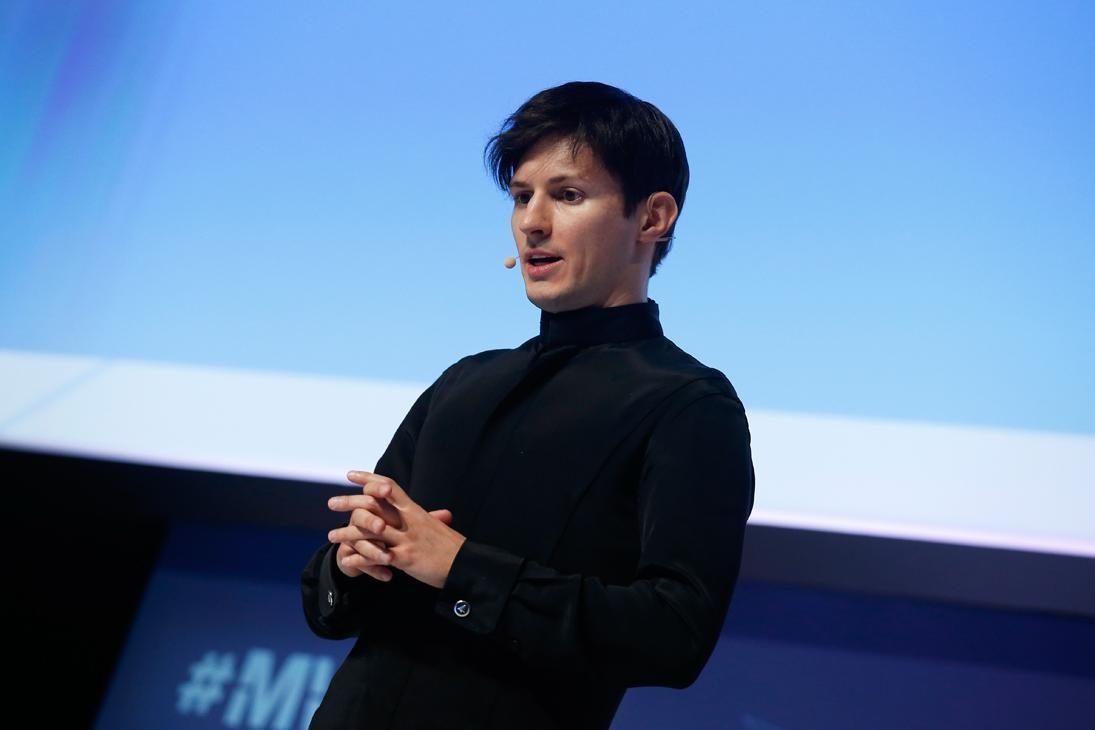
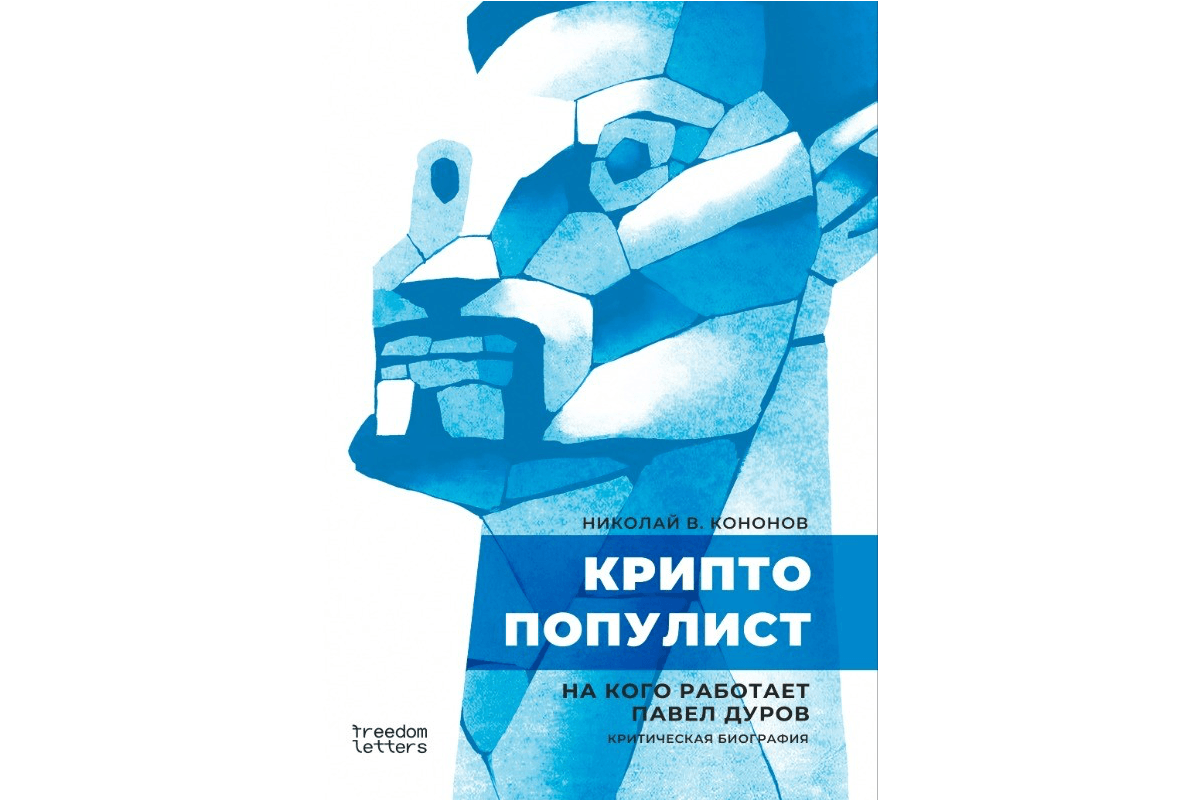
Freedom Letters has published Nikolai V. Kononov’s book The Populist. The Untold Story of Pavel Durov and Telegram. This updated and expanded biography is based on The Durov Code: The Real Story of VKontakte and Its Creator, released in 2012. The author met with Durov on multiple occasions and corresponded with him over many years. In the new edition, Kononov describes what happened to Durov after he left VKontakte and created the Telegram messenger. The Insider is publishing a chapter from the book that recounts how Durov met at the Kremlin with Sergei Chemezov and Vladimir Putin, how VKontakte was taken over from him, how he launched Telegram, what role Alisher Usmanov, Igor Sechin, Oleg Deripaska, and other oligarchs played in Durov’s fate, and what happened during Alexei Navalny’s participation in the Moscow mayoral election and the annexation of Crimea.
Editor’s note by The Insider: the author of the book calls Pavel Durov a “totem,” explaining this in Durov’s own words:
When they asked Durov what he saw himself doing in the future, he broke the silence and said, smiling, "Totem.” His desires, passions and skills had converged to shape this vision. Everything uninteresting and unnecessary had been eliminated. Those around him dismissed his words as a joke, but the formula determined everything that happened in his life thereafter. 'I want to become an Internet totem.'
PART II.
CRYPTORIOT
CHAPTER SIX
I met Durov for the last time in Russia in January 2014; he fled a month later. We set off on foot from Singer House, heading for one of St. Petersburg's most luxurious restaurants, Terrace. Durov was dressed all in black, wearing padded trainers and a baseball cap similar to those worn by Kendall Roy in Succession.
As always, Totem was unrecognisable on the crowded Nevsky Prospect, but everything else had changed.
Durov had already launched Telegram and was rapidly gaining millions of users. He had also sold his stake in VK. Although he was still in charge of the social network, he made no secret of the fact that he would be resigning within a month or two.
What was most surprising was the alteration in his behaviour. He was acting more suspicious than ever before. On the street, he occasionally gazed around. At pedestrian crossings, he cautiously watched the cars slowing down in front of us. When the elevator took us to Terrace, he chose a table in the corner rather than in the open air as usual.
Taking his seat, Durov pulled back the curtain, making sure that no one was behind it and that we were not being overheard.
As I later learned, he was afraid of being spied on. Totem wanted me to hear about the moment he decided to not only get rid of VK, but also to move Telegram out of Russia to avoid jail.
According to Durov, the story went like this. He received an invitation to a meeting with Putin and “entrepreneurs” — or, more accurately, oligarchs. Durov accepted and, at the appointed hour, he and his senior VK shareholder Usmanov found themselves jostling in the gilded hall of the Kremlin, having had their smartphones taken by security guards. Various people came up to greet them, including Sergei Chemezov.
Chemezov, a tall, charismatic and folksy man, created the impression that his power was boundless. This was not unreasonable: he served alongside Putin in the same intelligence department in Dresden in the 1980s. Their families lived in the same building and shared a car. Once in the Kremlin, Putin appointed people he knew well to the highest positions, and Chemezov was no exception. By the time he met Durov, Chemezov was heading Rostech, a state corporation comprising fairly innovative plants and factories.
He told me that had heard about Telegram's unique data transfer protocol, Durov recalled. Chemezov pointed to a man some distance away and said bluntly, “Here's the director of our cryptography institute. Transfer him the keys to your protocol.”
Twirling his Kendall cap in his hands, Durov told me that at that moment he realized immediately that it wasn't worth arguing with anyone in that hall.
He nodded and smiled gently but did not even try to explain to Chemezov that the point of the Telegram protocol is its lack of “decryption keys”. Data can’t be transmitted or intercepted because the decryption code is generated on the recipient's smartphone or laptop. Decryption occurs only between the sender and the recipient for each of the billions of messages sent in secret mode.
After four hours, the exhausted oligarchs, who had sprawled on the chairs during their forced digital detox, abruptly picked themselves up, adjusted their ties, and lined up along the walls. Putin entered.
Once the official proceedings had concluded, Usmanov managed to sneak up to the president and introduce Durov to him. Suddenly, Putin seized the initiative.
According to Totem, Putin lectured him in such a way that it was difficult to interrupt. He said, “You have pornography and illegal cinema there, but we don't need such things in Russia. We don't need all this illegal entertainment here.”
For some reason, he repeated, “If you want to do this kind of business, do it in Israel,” twice. Putin had probably remembered the biographies of Totem's co-founders, or perhaps his own relationship with Mirilashvili Sr. in 1990s gangster St. Petersburg, where the future president worked as international relations manager in the mayor’s office.
Durov felt that no matter what he said to Putin, he wouldn't be heard. A guy from the last generation of KGB officers who believed that the Internet was invented by the CIA and everything on it was a hoax, stood before him, ranting.
Totem objected, of course, saying that he planned to show the world the greatness of the Russian programming school, blah blah blah, but there was no longer any hope for garnering Putin's favor.
Simultaneously, Durov realised that his reasons for staying in Russia were weakening and melting away like last year's snow.
The second man in the state reached him later. Prime Minister Medvedev, who often posted cringe-worthy content on Twitter, approached Durov, held out his hand for a handshake and whispered, “I saw it. I saw. [My press secretary Natalia] Timakova has your Telegram. Congratulations on your success.” For some reason, he added: “As a user, I appreciate it, but as an official, I can't.”
Soon, as if he had visited bizarro-land, Durov left the Kremlin with a kind of fatigue and went on his way.
It later emerged that Chemezov and Usmanov had been considering merging their corporations into one holding company. Perhaps Usmanov wanted to cement Durov's decision to leave VK by buying his stake and pushing him to resign as CEO.
Alternatively, perhaps the oligarch genuinely believed that Durov would charm Putin.
I did not fully believe the story I heard from Totem, but it would have been pointless to try to speak with the other characters in it. Usmanov would never confirm such a thing, to say nothing of Medvedev, Chemezov or the director of the Institute of Cryptography, who remained off limits to independent journalists.
Eventually, more than a decade later Putin himself confirmed that there had been a meeting with Durov.
At a press conference in August 2024, Putin was asked whether it was true that Durov, who was incarcerated by the French authorities, was supposed to have met with him shortly before his arrest, in Baku. “No, he should not have,” he replied.
“I have only seen Mr. Durov once,” Putin added. “It happened many years ago. I don't even remember exactly when. He was just telling me about his plans. It was in the Kremlin, at a meeting with businessmen.”
Finally, Durov himself revealed in an interview with Le Point that, when asked about the meeting with Putin, the top official “insisted that, in his opinion, social networks should become instruments of power.”
***
Three months after our last conversation in St. Petersburg, the Kremlin's strategy for nudging Durov to leave VK became clear. As in the card game 'Mafia', Totem woke up, wiped his eyes, and saw that the shareholders sitting around the table were utterly different from his school mate Slava and Lev.
It soon became clear that Yuri Milner — whose investment strategy Wired detailed in “The Web Is Dead. Long Live the Internet” — had left a legal loophole in the contract with VK. Either for the sake of his future needs or due to an oversight.
According to the contract, if any of the shareholders intended to sell their shares, they were obliged to offer them to the other shareholders first. Therefore, there could be no outsiders among the social network’s owners . But if the sellers were companies owned by the shareholders, rather than the shareholders themselves, then there could be no such buy-out offer.
It was 39-year-old Ilya Scherbovich who first squeezed through this loophole.
Scherbovich called himself an investment banker, but in fact he acted as a connoisseur, acquiring different entities on behalf of third parties or generating income through successful interventions in shareholder conflicts.
This person was much more emblematic of Putin's era than the Durov brothers. To understand this character's role in the drama of Putin's Russia, we need to take a brief look at its historical context.
Firstly, the idea that Putin wants to turn his country into a modernised Soviet Union is a myth that has proved remarkably resilient around the world. It is based on the fact that Putin worked in the KGB from 1975 onwards and is nostalgic for the agency’s heyday, when it considered itself a kind of nobility or an enlightened class. At the same time, this theory goes, Putin’s ambitions can be seen as imperial: he wants to regain control of the former Soviet republics, which he believes have little legitimacy.
While these arguments have some merit, all of Putin's other actions and values suggest that he despises both communism and socialism. He is completely comfortable with capitalism. This is evident in the laws that have altered the political system since Putin came to power.
Putin promptly lobbied for a mineral extraction tax, and many people hoped that money from the sale of oil and gas would benefit citizens. However, over time, it became clear that the super-profits were flowing into private pockets.
What about gasification of villages and small towns, universal access to sewage systems, a significant improvement in the quality of medicine, and an increase in social payments? Failed. What about the mining tax? It was partly settled in Russia's Stabilisation Fund and partly given out as bonuses and dividends to Putin's friends. It was also used to strengthen the repressive apparatus that protects the bureaucratic mafia's prosperity.
In addition, Putin granted citizens a flat taxation scale. The stated aim of this measure was to stimulate entrepreneurship: fewer dependents — more successful businessmen. Citizens were outraged at this tax game, but the media and liberal intelligentsia explained to them that it was businessmen who were building a new beautiful life, and we should be grateful to them.
Putin then went even further and lobbied for a simplified system of taxation, which was a real gift for the entrepreneurs: 6% on income of up to several million roubles a month stimulated business. Have you ever faced anything similar anywhere in “developed countries” (Russian propaganda loves colonial cliches) that the revenue of an ordinary entrepreneur earning a hundred thousand dollars per month would be taxed at 6%?!
Before the 2014 annexation of Crimea and the subsequent collapse of the rouble, Putin's gifts encouraged political apathy among active citizens. After the tumultuous 1990s, businesspeople were willing to overlook Putin's shortcomings in light of his generosity. Many excuse him to this day, despite the rumble of caterpillar tanks and the roar of missiles.
Thus, during Putin's years in power, the Soviet economic and social system has been completely dismantled, with free healthcare as its only remnant. And even in that case, more and more citizens are turning to private clinics. Money rules everything. In Russia, if you have wealth, you can literally buy anything: a classified database, a weapon, a position, a court judgement or an audience with any official.
Putin and his cronies have created a sort of capitalism, with a formally regulated but, in reality, Darwinian free market where only the strongest survive. No money or corrupt friends? You are nobody.
Over time, medium-sized businesses started to complain, as companies that had grown to a reasonable size in Russia were either nationalised or taken over by the “siloviki” and their associates. Gradually, Darwinian capitalism turned into outright mafia capitalism.
Wiser entrepreneurs have moved their brands elsewhere or been forced to sell their assets in an attempt to avoid hefty discounts. The rest have become state-owned or fallen under the control of the mafia, acting as nominal holders.
Until the 2010s, the endless redistribution of property was not a concern for internet businesses. However, as companies and the entire social network economy grew, graduates of KGB and FSB schools appeared in that sector too. Ilya Scherbovich, who knocked on Durov's door, was one of them: a typical hero of the Putin era — a “solver”.
Scherbovich remained an investment banker while acting as an intermediary in the transfer of large properties. With Igor Sechin's blessing, he approached Durov and his company.
Sechin served in the intelligence services in Angola in the 1980s. He then became Putin's chief of staff in the 1990s and figured out how to wrest control of the Yukos oil company from oligarch Mikhail Khodorkovsky in the 2000s. Finally, he headed the state oil corporation Rosneft and solidified his position as one of Putin's closest confidants.
At first, Durov did not believe that Usmanov was not involved in his latest issues. However, when he saw the amazed reaction of his senior shareholder, he accepted that Scherbovich was not the oligarch's creation. While negotiating with Slava and Lev for their shares, Usmanov overlooked negotiations with Scherbovich behind his back.
At the same time, Durov did not believe that Scherbovich was operating independently, and he wondered who had sent him.
I was preoccupied by this question, too. Following a series of confidential discussions with various insiders, I became convinced that Sechin was involved. For one thing, Shcherbovich once sat on Rosneft's board of directors.
The owner of one of the last independent oil companies in Russia told me that Sechin would always prosecute the seller to finalise an M&A deal. The aim was to prevent the seller from backing out or reducing the price. To this end, Sechin knew FSB General Oleg Feoktistov and recruited him to work at Rosneft.
Having learned all this, I decided to write an article for Hopes & Fears, where 1 was an editor. To this end, I arranged an interview with Scherbovich himself. Before the visit, I looked at photos of him — he always posed in a suit and was only filmed a few times wearing fishing overalls and a knitted hat. On his personal website, he boasts about his piscatorial successes: “Among my most outstanding records is catching a 30.4 kg taimen on a fly.”
Scherbovich received me in his unremarkable office near Paveletsky railway station in Moscow. Through the dusty windows, I watched freight trains on the tracks outside. Scherbovich spoke vaguely, trying to convince me that he had exploited his personal acquaintance with Mirilashvili and Leviev to pursue his own financial goals. He insisted that no one was backing him.
After the article was published and widely quoted by media outlets, including some global ones, Scherbovich called on me. Although Hopes & Fears only had a five-person editorial team and half a million readers, Durov's new partner was keen to approach us personally. I switched on the speakerphone and asked my colleagues to record the conversation.
Having made some trivial complaints about sensationalist journalists and demanded that we remove the article, Scherbovich took a more menacing tone. He suggested meeting in court and asked me where I had found out about Sechin's involvement. I replied that I wasn't going to delete anything, nor was I going to reveal my sources. “You have no sources! You made it all up!' Scherbovich exclaimed before saying farewell.
A few years later, Durov confirmed to me that Putin's right-hand man had been involved in the takeover of VK. He hinted that another oligarch had informed him of this. Through a process of elimination, I concluded that it was probably Roman Abramovich. Abramovich had become acquainted with Durov and had sought his advice on investing in promising start-ups.
The oligarch asked Putin directly who was muddying the waters surrounding the social network. The president nodded towards Sechin’s office and said that “Igor was in charge of the situation.”
By this point, Durov had already left Russia, albeit temporarily. 'It may well be that I am already being gradually boiled,' he wrote to me. 'My return to Russia is not expected. They can remove me if Putin says so. In this regard, all the current stir may be necessary psychological preparation to stop me from doing something unexpected.”
Durov remained relatively calm because Usmanov had promised to try to resolve the conflict, and the developers had already spent a year working on the code for the messenger. They had not only crafted the protocol for data transmission, but also polished the app itself in its beta version.
“At some point, I will switch to global tasks, as I'm not interested in Russia due to its locality, and because I only own a 12% stake in VK,” explained Durov. “However, if they behave well, I will help them to prevent things from falling apart here so quickly. I am unlikely to live and work in the Russian Federation long term, as political storms and censorship are on the horizon. I used to demonstrate neutrality rather than loyalty, but today, that is no longer appropriate.”
In order to facilitate “switching to global tasks,” Durov was granted citizenship of the island nation of St Kitts and Nevis, as this made it easier for him to enter two of the most visa-restrictive states: England and the US.
Totem's outward calm remained unshaken until autumn 2013. Nothing seemed able to faze him, including the attacks by Scherbovich and his associates at shareholder meetings, and the attempts by the prosecutor's office to summon Durov to Russia to testify. The developers were perfecting Telegram, and it wasn't until the messenger was released in app stores in August that the shitstorm began.
***
“I waited three years for similar figures on daily VK registrations and only three weeks for Telegram. Maybe my brother and I have been focusing on the wrong things these past few years”. That's what Durov confessed after the public launch of the messenger.
Telegram was far from the ideal online universe — unlike WeChat in China, whose users can pay bills, order goods and services, and request documents from various institutions. However, thanks to Nikolay Durov and his team, Telegram was fast enough to deliver messages, photos and videos on weak mobile coverage and slow protocols such as EDGE.
When I passed on to Totem the readers’ question from Hopes & Fears, “How is Telegram better than WhatsApp?”, his response was, “They don't have the cloud, security, speed of the app, or the ability to handle big data in large group chats.” Back in 2014, it was true.
Telegram was flooded with thousands of users from Saudi Arabia and Qatar. Support services were led by Michael Ravdonikas, a former marketer who answered all questions in English. Then came the wave from Kuwait and Libya. According to Durov, many people asked whether it was safe to transfer sensitive data. By autumn, Telegram had more users from Asia than from Russia.
That's when the first dangerous call from Scherbovich rang.
Scherbovich viewed the launch of the new project as an avenue to criticise Durov. As Totem remained a shareholder and head of VK, Scherbovich believed that he was not entitled to develop a competing product or recruit employees from his company.
Understandably, Durov was angered by this logic, but he did not suspect that this was merely the prelude to the clash.
Curses flew at Totem from the other tower of the Kremlin as well, and the situation was becoming increasingly tense. The scandalous Moscow mayoral election was approaching. The re-elected mayor, Sergei Sobyanin, had insisted that Alexei Navalny, who was popular, be permitted to run.
The aim was to boost the mayor's popularity. Otherwise, the elections were at risk of becoming a victory for the opposition. The authorities once again started trying to shut down groups they disliked on VK.
The arrangement was simple. “If you don't ban Navalny's groups, you go to jail,” Durov explained to me. “If you ban them, you'll ruin your reputation around the world.” I clarified: “Have you already received demands for a ban?” “They hinted that we might need help,” he replied.
Eventually, the situation resolved itself. Navalny lost to Sobyanin and accused him of electoral fraud. Instead of taking to the streets, he chose to fight for the truth legally by filing a complaint with the Supreme Court. The Muscovites did not dare to build barricades and the VK issue was put on hold.
Not for long, though. Soon, Usmanov summoned Durov to a meeting with businessmen and the president of the country.
A few months later, at Terrace restaurant, Totem spent half an hour telling me about it. I also asked him why he had agreed to go to the Kremlin if he had no illusions about Putin. Or did he?
Our old interview came to mind.
— Nikolai told me that, in a university questionnaire asking 'Which politician do you like the most?', you mentioned Putin. What was your reasoning?
— At first, I wrote 'Roosevelt', but then I realised it wasn't patriotic, so I thought further. This was in 2002, before Khodorkovsky s case. Putin also liked Roosevelt, and now it's clear why. After Yeltsin, he seemed to be a very constructive figure. Who else could I mention?..
But this time, Durov just shook his head and explained everything in terms of the pragmatics of the moment. Usmanov and his cronies did not want to quarrel with Sechin. They initially discouraged Durov from an open confrontation and urged him to resolve all issues behind the curtain. An important part of this process was the meeting in the Kremlin.
After fleeing Russia amid a criminal case involving an injured policeman, Durov realised that only Usmanov could resolve the matter. 'Whether or not I can go back to Russia to see my friends depends on his efforts,' he wrote to me at the time.
However, the meeting with the pudgy oligarchs and their supreme boss in the Kremlin made Durov despondent. He did not expect to meet such dull, archaic, and inept characters at the top of the hierarchy. His despondency was indeed about the fate of his homeland, not just his personal plans.
The deadline for Usmanov's offer to buy back his shares had not yet expired. So, when Durov received the clear signal that Putin considered him not only to be running a porn hosting company, but also a traitor taking Telegram's unique technologies to the United States, he quickly sold his stake in VK.
Estimates of how much of Usmanov's money ended up in Durov's accounts vary — from one-and-a-half to three hundred million dollars. Neither Durov nor Usmanov provided any definitive numbers.
Totem had no intention of leaving VK in a hurry and became CEO, ostensibly to hand over management responsibilities to someone else. However, he did not remain in this position for long.
In late autumn, Ukraine rose up and the first Maidan protests broke out. As 2014 got closer, there was a sense that the pro-Russian President Yanukovych would be ousted. There was also a sense that the majority's desire for European integration would be realised.
Meanwhile, in Russia, Navalny was inspiringly setting up cells of his decentralised network across the country. By spring, the pressure on independent media had intensified. A wave of persecution began when Maidan overthrew Yanukovych and Russia annexed Crimea with the help of “polite” soldiers.
In mid-March, the owner ofLenta.ru, the largest Russian online publication, dismissed the editorial team responsible for reporting news to its hundred million readers. Durov had become the last independent editor-in-chief of a major Russian online media outlet who was not reporting to Kremlin officials. They could not order him to remove a post or edit a video.
“Send requests, and we will consider them fairly. I’m not going to do anything illegal,” Durov responded to officials’ attempts to scare or persuade him.
The intonations of Totem were deferential, while the altercation with Shcherbovich was harsh. Political censorship was just beginning to strengthen. “Now they are dealing with everyone who did not prove themselves sufficiently reliable in the Bolotnaya situation, it's not just Navalny and the others” — Durov wrote to me before the Maidan riots in Kyiv.
April arrived. While the rest of the world mocked the golden toilet in the residence of Ukraine's fugitive president, a war sponsored by the Kremlin was already raging in the east of the country.
Durov published one of his most desperate posts yet. He was still maneuvering as best he could, not mentioning the annexation of Crimea, but clearly indicating that he himself would soon be repressed.
On March 3, 2014, the Prosecutor's Office demanded that I shut down Alexei Navalny's anti-corruption group, threatening to block VK. However, I didn't close the group in December 2011, nor have 1 closed it now.
Over the past few weeks, I have been under pressure from various sides. I managed to win more than a month using various methods, but now it's time to say that neither I nor my team will carry out political censorship. We are not going to remove any anti-corruption reports, Navalny's community, nor hundreds of other communities that we are required to block. The freedom to disseminate information is an inalienable right of a post-industrial society. Without this right, VK's existence wouldn't make sense.
After reading this text, I asked the author: “Why do you need an open conflict with the authorities?”
Durov replied: “This is all more important than my tactical goals right now. A generation needs a point of reference. Someone had to stand up and say something during this widespread submission to idiocy.”
Totem spoke frankly, but, as was often the case with him, he didn't provide the context. In addition to the pressure from the secret services, the Kremlin finally acted and struck at Durov's most precious possession: Telegram.
_________________________________________
Nikolai V. Kononov. The Populist.